





Cataracts remain one of the most common causes of vision impairment worldwide, especially among individuals above the age of 50. As medical technology has advanced, modern cataract surgery has become safer, faster, and highly effective, allowing patients to restore clear vision with minimal downtime. Today, patients are no longer limited to traditional procedures. They can access advanced cataract treatment options combined with seamless insurance support, including 100% cashless cataract surgery at specialized eye care centers.
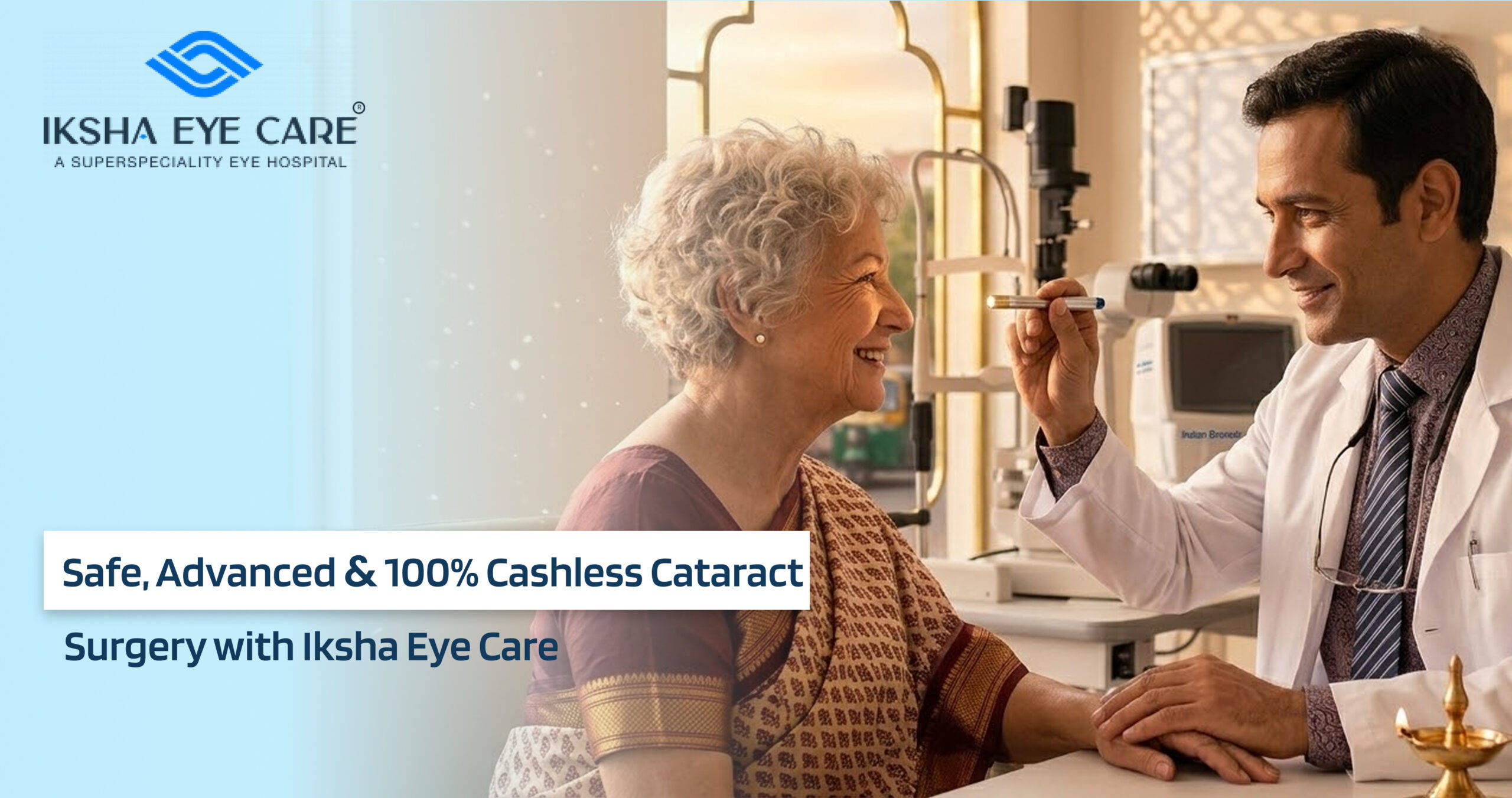
At Iksha Eye Care, patients benefit from state-of-the-art cataract surgery technology, experienced ophthalmologists, and cashless treatment options through multiple insurance providers. This approach ensures that individuals can focus on their vision recovery without worrying about complex financial procedures. By combining medical expertise with patient-centric care, Iksha Eye Care provides a reliable solution for those seeking safe and advanced cataract surgery with cashless convenience.
Understanding Cataracts and Their Impact on Vision
A cataract occurs when the natural lens of the eye becomes cloudy, preventing light from passing clearly to the retina. Over time, this cloudiness worsens, causing vision to become blurry, dim, or distorted.
Common symptoms include:
- Blurred or hazy vision
- Difficulty seeing at night
- Sensitivity to light and glare
- Fading or yellowing of colors
- Frequent changes in eyeglass prescription
As cataracts progress, they can significantly affect daily activities such as reading, driving, and recognizing faces. The most effective treatment is surgical removal of the cloudy lens and replacement with a clear artificial intraocular lens (IOL).
Why Modern Cataract Surgery Is Safer Than Ever
Technological innovations have dramatically improved cataract surgery outcomes. Today’s procedures are minimally invasive, highly precise, and extremely safe, allowing patients to regain clear vision quickly.
Advanced techniques now include:
- Phacoemulsification technology
- Micro-incision cataract surgery
- Premium intraocular lenses
- Computer-guided surgical systems
These advancements allow surgeons to remove the cataract through tiny incisions, reducing healing time and improving surgical accuracy. Patients typically experience rapid visual recovery and minimal discomfort after the procedure.
The Advantage of Cashless Cataract Surgery
One of the biggest concerns for patients seeking eye surgery is the financial process involved with medical insurance. Cashless treatment eliminates this complexity.
100% cashless cataract surgery allows eligible patients to receive treatment without paying upfront hospital expenses. Instead, the hospital coordinates directly with the insurance provider to process the claim.
Benefits of cashless cataract surgery include:
- No upfront payment for approved treatments
- Simplified insurance claim process
- Reduced administrative stress for patients
- Faster access to medical care
At Iksha Eye Care, patients receive assistance with insurance documentation, ensuring a smooth and efficient treatment experience.
Advanced Cataract Surgery Technology at Iksha Eye Care
Modern eye care facilities combine medical expertise with advanced diagnostic and surgical technology. At Iksha Eye Care, patients benefit from comprehensive cataract treatment supported by cutting-edge equipment.
Key features of advanced cataract surgery include:
High-Precision Diagnostic Evaluation
Before surgery, specialists conduct detailed eye examinations to evaluate:
- Corneal health
- Lens opacity
- Retinal condition
- Overall visual function
This diagnostic process ensures that surgeons select the most suitable surgical technique and intraocular lens for each patient.
Micro-Incision Surgical Techniques
Modern cataract procedures use micro-incisions that are extremely small, often eliminating the need for stitches. These smaller incisions promote faster healing and reduced surgical trauma.
Premium Intraocular Lens Options
Patients can choose from different types of intraocular lenses designed to improve visual outcomes, including:
- Monofocal lenses
- Multifocal lenses
- Trifocal lenses
- Extended Depth of Focus (EDOF) lenses
- Toric lenses for astigmatism
These lenses help restore vision and may significantly reduce dependence on glasses after surgery.
What to Expect During Cataract Surgery
Cataract surgery is one of the most commonly performed medical procedures and typically takes 15 to 20 minutes per eye.
The process generally includes:
- Pre-surgical evaluation and diagnostic testing
- Application of anesthetic eye drops
- Removal of the cloudy lens using ultrasound technology
- Insertion of a clear artificial intraocular lens
- Post-surgery monitoring and discharge
Because the procedure is minimally invasive, most patients return home the same day and can resume normal activities shortly afterward.
Recovery After Cataract Surgery
Recovery from cataract surgery is usually quick and comfortable. Patients may notice improved vision within a few days, although complete healing may take a few weeks.
Typical recovery guidelines include:
- Using prescribed eye drops
- Avoiding heavy lifting temporarily
- Protecting the eye from dust or water
- Attending follow-up checkups
With proper care, cataract surgery can deliver long-lasting vision improvement and enhanced quality of life.
Why Patients Trust Iksha Eye Care for Cataract Treatment
Choosing the right eye care center is essential for achieving the best surgical outcomes. Patients seeking cataract surgery often look for hospitals that combine advanced technology, experienced surgeons, and patient-friendly services.
Iksha Eye Care provides a comprehensive approach to cataract treatment by focusing on:
- Advanced surgical technology
- Experienced ophthalmology specialists
- Comprehensive eye diagnostics
- Cashless insurance facilities
- Personalized patient care
This integrated model ensures that patients receive high-quality medical care while enjoying a convenient and stress-free treatment process.
Who Should Consider Cataract Surgery
Cataract surgery is recommended for individuals whose vision problems begin to interfere with daily life. Candidates often include people who experience:
- Difficulty reading or watching television
- Problems driving at night
- Increased sensitivity to glare
- Reduced visual clarity despite updated glasses
Early consultation with an eye specialist helps determine the right time for surgery and ensures optimal outcomes.
Conclusion
Cataract surgery has evolved into a safe, advanced, and highly effective solution for restoring vision. With modern surgical techniques, premium lens options, and minimally invasive procedures, patients can achieve clearer vision with faster recovery than ever before.
At Iksha Eye Care, individuals benefit from cutting-edge cataract surgery technology combined with 100% cashless treatment options, ensuring both medical excellence and financial convenience. For patients seeking reliable and advanced cataract care, choosing a specialized eye hospital with experienced surgeons and modern facilities is the key to successful vision restoration.
FAQ
Is cataract surgery safe?
Yes, modern cataract surgery is considered one of the safest and most effective surgical procedures, with high success rates and minimal recovery time.
What is cashless cataract surgery?
Cashless cataract surgery allows patients to undergo treatment without paying upfront costs if their insurance provider approves the claim, as the hospital directly processes the payment with the insurer.
How long does cataract surgery take?
The procedure typically takes around 15–20 minutes per eye and is performed as an outpatient surgery.
How soon can vision improve after cataract surgery?
Many patients notice improved vision within a few days after surgery, while complete healing may take a few weeks.
Does cataract surgery permanently restore vision?
Cataract surgery removes the cloudy lens and replaces it with a clear artificial lens, providing long-term vision improvement for most patients.