








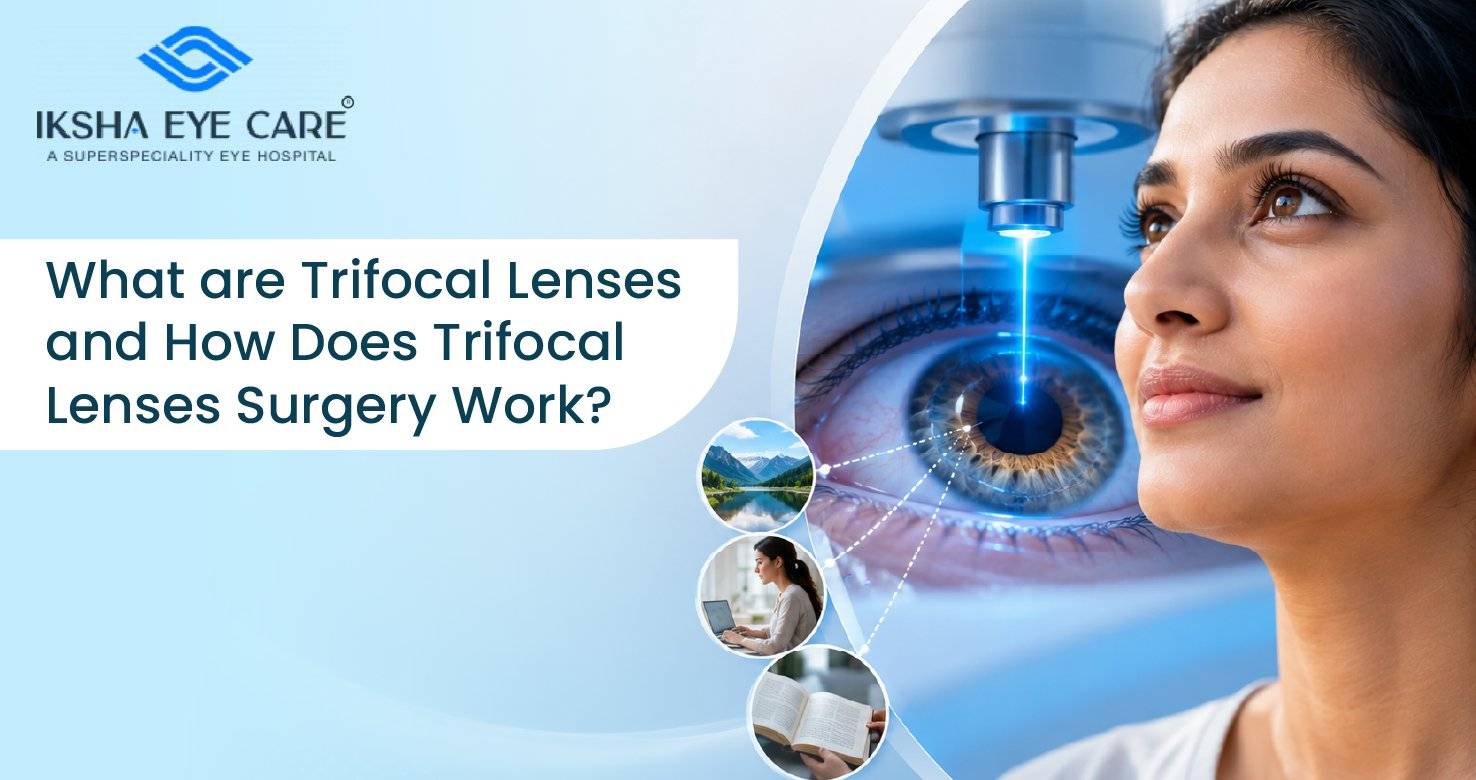
For people undergoing cataract surgery, choosing the right intraocular lens (IOL) can be almost as important as the surgery itself. Traditional monofocal lenses are generally designed to provide clear vision at one primary distance, while trifocal lenses are designed to provide vision at multiple distances. This can make them an attractive option for patients who want to reduce their dependence on glasses after cataract surgery.
But how do trifocal lenses work, and are they suitable for everyone? The answer depends on several factors, including the health of your eyes, your lifestyle, visual expectations, and the presence of other eye conditions. Understanding the technology before making a decision can help you have a more productive discussion with your ophthalmologist.
What Are Trifocal Lenses?
Trifocal lenses are premium intraocular lenses designed to provide useful vision at three primary distances: near, intermediate, and far. They are implanted inside the eye during cataract surgery after the cloudy natural lens is removed.
A conventional monofocal IOL generally provides clear vision at one selected distance. For example, a lens may be selected to provide good distance vision, while reading glasses are still required for close work. Trifocal IOLs use a specialized optical design to distribute incoming light across different focal points.
The three focal ranges are broadly intended for:
- Distance vision: driving, watching television, and recognizing faces.
- Intermediate vision: computers, dashboards, and other activities at arm’s length.
- Near vision: reading books, newspapers, menus, and smartphones.
The exact visual outcome varies from person to person. Trifocal lenses are not simply stronger versions of conventional lenses; they use a different optical design to provide multiple focal points.
How Does Trifocal Lens Surgery Work?
Trifocal lens surgery is generally performed as part of cataract surgery. The cloudy natural lens is removed and replaced with an artificial intraocular lens.
Before surgery, the eye is carefully measured to determine the appropriate IOL power. Measurements may include corneal curvature, eye length, corneal shape, and other parameters needed for lens selection.
During the procedure, the surgeon makes a small opening in the cornea and creates an opening in the capsule surrounding the natural lens. The cloudy lens is then broken into small fragments and removed using an ultrasound-based technique called phacoemulsification. The trifocal IOL is subsequently positioned inside the eye, where it is designed to remain permanently.
The procedure is usually performed under local or topical anesthesia, and most patients can return home the same day, depending on the clinical setting and their individual circumstances.
How Do Trifocal IOLs Provide Vision at Three Distances?
The optical design of a trifocal IOL is what makes it different from a standard monofocal lens.
A trifocal lens contains carefully engineered optical zones or diffractive elements that divide incoming light into different focal points. This allows the brain to receive information corresponding to distance, intermediate, and near vision.
The brain then learns to use the most useful image for the task being performed. This process is known as neuroadaptation.
Because light is distributed between different focal points, some patients may notice visual phenomena such as halos, glare, or rings around lights, particularly at night. These symptoms can become less noticeable as the brain adapts, although they may persist in some individuals.
This is one reason why selecting a trifocal lens should involve more than simply asking whether you want to reduce your dependence on glasses.
Who Is a Good Candidate for Trifocal Lenses?
Trifocal IOLs may be considered for cataract patients who want to improve vision across multiple distances and potentially reduce their need for spectacles.
However, not every cataract patient is an ideal candidate.
Your ophthalmologist may assess:
- Cataract severity
- Corneal health
- Tear-film and dry-eye status
- Retina and macula
- Optic nerve health
- Previous eye surgeries
- Existing eye diseases
- Astigmatism
- Overall visual expectations
Conditions affecting the retina, optic nerve, cornea, or ocular surface can influence whether a multifocal or trifocal lens is appropriate.
A detailed examination is therefore essential before choosing a premium IOL.
Trifocal vs Monofocal Lenses
The main difference between these lenses is the range of vision they are designed to provide.
A monofocal IOL generally focuses light primarily at one distance. Patients may achieve excellent distance vision but need reading glasses for near tasks if the lens is targeted for distance.
A trifocal IOL is designed to provide useful vision at distance, intermediate, and near ranges.
The choice is therefore not simply about which lens is “better.” Monofocal lenses may be preferable for some patients because of their optical characteristics and because they generally have fewer issues with unwanted light phenomena. Trifocal lenses may be attractive to carefully selected patients who place a high value on reducing spectacle dependence.
The decision should be individualized rather than based solely on the lens category.
What Are the Benefits of Trifocal Lens Surgery?
The biggest potential benefit of trifocal IOLs is their ability to provide functional vision across multiple distances.
For an appropriately selected patient, this may make activities such as reading, using a smartphone, working at a computer, and viewing distant objects more convenient without constantly changing glasses.
Other potential advantages include:
- Reduced dependence on reading glasses
- Useful intermediate vision
- Distance vision without a separate pair of spectacles
- Permanent placement inside the eye
- Correction of the cataract at the same time
However, spectacle independence is not guaranteed. Some patients may still need glasses for specific activities, particularly in situations requiring very fine near vision or under challenging lighting conditions.
What Are the Possible Limitations?
Trifocal lenses can provide a broader range of vision, but they involve compromises in optical design.
Some patients experience halos, glare, starbursts, or reduced contrast, particularly in low-light conditions. These effects can be noticeable when driving at night or looking directly at bright lights.
Dry eyes and other ocular-surface problems can also affect the quality of vision after surgery.
Another important consideration is that trifocal lenses are generally more demanding in terms of patient selection than standard monofocal lenses. A healthy cornea, retina, and optic nerve are important for achieving a satisfactory visual result.
Patients should therefore discuss both the advantages and potential compromises with their surgeon before deciding.
What Is Recovery Like After Trifocal Lens Surgery?
Recovery after cataract surgery with a trifocal IOL is generally gradual. Vision may be blurry immediately after surgery and can improve over the following days and weeks.
Some patients notice fluctuations in vision while the eye heals. Mild irritation, watering, light sensitivity, or temporary redness can also occur.
Eye drops prescribed by the surgeon should be used exactly as instructed. Patients should also avoid rubbing the operated eye and follow their surgeon’s guidance regarding exercise, swimming, driving, and other activities.
Neuroadaptation may take additional time. Even after the eye has healed physically, the brain may need time to become accustomed to processing images from the trifocal lens.
How Much Does Trifocal Lens Surgery Cost in India?
The cost of trifocal lens surgery in India varies depending on several factors. These may include the type and brand of IOL, diagnostic testing, surgeon and hospital charges, technology used during surgery, and the patient’s individual eye condition.
Because premium IOL selection is personalized, quoting a single universal price can be misleading.
Patients should ask what is included in the quoted package and whether pre-operative testing, medications, follow-up visits, and any additional procedures are included.
More importantly, the cheapest or most expensive lens is not necessarily the best choice. Lens suitability should come before price.
Trifocal Lenses Eye Treatment in Mumbai
Patients searching for trifocal lenses eye treatment in Mumbai should choose an eye-care centre where the decision is based on a detailed examination rather than simply selecting a premium lens.
Iksha Eye Care can be considered by patients in Mumbai who are seeking professional evaluation for cataract surgery and lens options. An ophthalmologist can assess the cataract, cornea, retina, ocular surface, and other factors before discussing whether a trifocal IOL is appropriate.
If you are considering trifocal lenses, discuss your daily visual requirements openly with your eye specialist. Someone who spends long hours reading, works extensively on a computer, drives at night, or has other specific visual demands may have different priorities from another patient.
Conclusion
Trifocal lenses are premium intraocular lenses designed to provide useful vision at distance, intermediate, and near ranges after cataract surgery. They work by using a specialized optical design that creates multiple focal points, potentially reducing dependence on glasses for many everyday activities.
However, trifocal lenses are not automatically suitable for every patient. Eye health, corneal and retinal condition, lifestyle, expectations, and tolerance for possible halos or glare all need to be considered.
A comprehensive eye examination is the best starting point. For patients considering trifocal lenses eye treatment in Mumbai, an ophthalmologist at Iksha Eye Care can evaluate the eyes and discuss appropriate cataract and IOL options based on individual needs.
FAQs
Are trifocal lenses better than monofocal lenses?
Neither is universally better. Trifocal lenses provide multiple focal points and may reduce spectacle dependence, while monofocal lenses generally provide vision at one primary distance and may have fewer unwanted optical phenomena. The appropriate option depends on the patient’s eyes and visual priorities.
Can trifocal lenses eliminate glasses completely?
Trifocal lenses can significantly reduce dependence on glasses for many appropriately selected patients, but complete spectacle independence cannot be guaranteed. Some patients may still require glasses for particular tasks or visual conditions.
How long does it take to adjust to trifocal lenses?
The eye generally heals progressively after surgery, while the brain may take additional time to adapt to the lens’s multifocal optical system. The adjustment period varies between individuals.
Do trifocal lenses cause halos at night?
Some patients may experience halos, glare, or other light-related visual phenomena after receiving a trifocal IOL. These effects may become less noticeable with neuroadaptation but can persist in some patients.
Is trifocal lens surgery the same as LASIK?
No. Trifocal lens implantation is generally performed during cataract surgery, where the natural lens is removed and replaced with an artificial IOL. LASIK reshapes the cornea and does not replace the natural lens.
Who should avoid trifocal lenses?
Patients with certain corneal, retinal, optic nerve, or ocular-surface conditions may not be ideal candidates. A comprehensive examination is necessary before making this decision.
Where can I get trifocal lens eye treatment in Mumbai?
Patients looking for trifocal lenses eye treatment in Mumbai can consider Iksha Eye Care for an ophthalmic evaluation. The suitability of a trifocal IOL should be determined after assessing the health of the eye and the patient’s visual requirements.