






Introduction: Understanding Modern Cataract Surgery Options
Cataracts are one of the leading causes of blurred vision and vision loss worldwide, especially among older adults. With advancements in ophthalmology, cataract treatment has evolved significantly beyond traditional surgical methods. Today, patients are increasingly exploring advanced procedures such as Laser Assisted Cataract Surgery and Micro Incision Cataract Surgery (MICS) to achieve safer surgery, faster recovery, and better visual outcomes.
One of the most common questions patients ask is whether laser-assisted cataract surgery is actually safer than conventional micro incision cataract surgery. Since both procedures are considered modern and effective, understanding the differences becomes important before making a treatment decision.
Advanced eye care centers now offer multiple cataract surgery technologies depending on the patient’s eye condition, lens requirements, and visual expectations. While both procedures aim to remove the cloudy lens and restore clear vision, the techniques used are different. The choice between them depends on several factors including precision, technology, eye health, surgeon expertise, and patient preference.
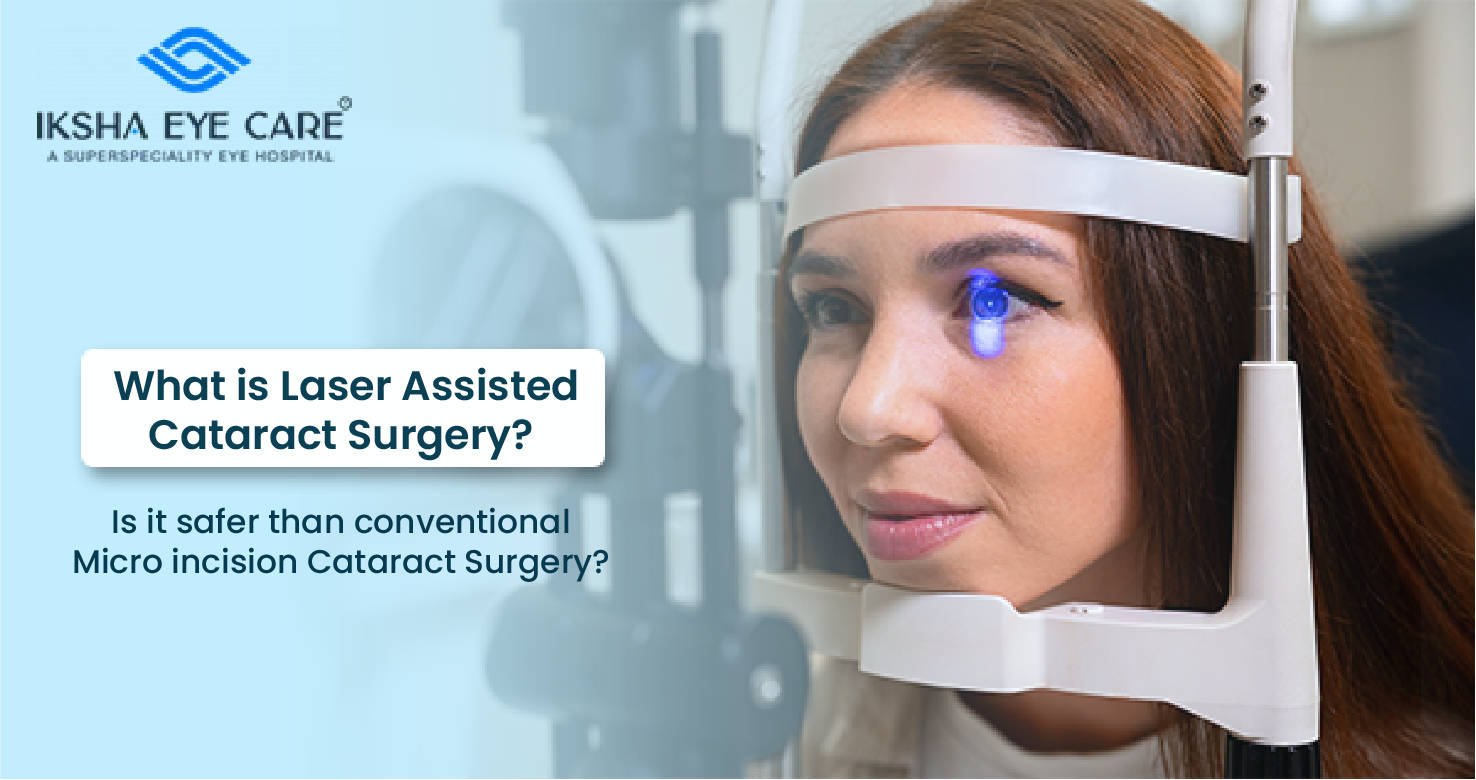
What is Laser Assisted Cataract Surgery?
Laser Assisted Cataract Surgery is an advanced cataract procedure that uses femtosecond laser technology to automate certain critical steps of the surgery with high precision. Unlike conventional surgery, where the surgeon performs most steps manually, the laser system assists in creating incisions and softening the cataract before removal.
The procedure begins with detailed imaging of the eye. This imaging system maps the eye’s structure and helps customize the treatment according to the patient’s anatomy. The laser then performs several key surgical steps including:
- Creating corneal incisions
- Opening the lens capsule
- Softening the cataract
After these laser-assisted steps, the surgeon removes the cataract and implants an artificial intraocular lens (IOL).
What is Conventional Micro Incision Cataract Surgery (MICS)?
Micro Incision Cataract Surgery, commonly known as MICS, is a highly advanced manual cataract surgery technique performed through extremely small incisions. In this procedure, the surgeon removes the cataract using ultrasound energy and implants a foldable intraocular lens.
MICS is considered minimally invasive because the incision size is very small, usually around 1.8 to 2.2 mm. Smaller incisions can lead to:
- Faster healing
- Reduced surgical trauma
- Lower risk of infection
- Minimal induced astigmatism
Experienced cataract surgeons commonly perform MICS due to its excellent safety profile and predictable outcomes. Despite being a manual procedure, modern MICS techniques are highly refined and widely trusted.
Laser Assisted Cataract Surgery vs MICS: Key Differences
Both procedures are designed to improve vision safely and effectively, but there are important differences in how they are performed.
| Feature | Laser Assisted Cataract Surgery | Micro Incision Cataract Surgery |
| Technology Used | Femtosecond laser + phaco surgery | Phaco microsurgical technique |
| Precision | Highly automated and image-guided | Surgeon-dependent precision |
| Incision Creation | Laser-created | Manual micro incision |
| Cataract Softening | Laser-assisted | Ultrasound-assisted |
| Recovery | Usually fast | Usually fast |
| Cost | Higher | Comparatively lower |
| Customization | Highly customized | Customized by surgeon expertise |
Laser-assisted surgery focuses heavily on automation and imaging precision, while MICS relies more on the surgeon’s experience and microsurgical skill.
Is Laser Assisted Cataract Surgery Safer?
The safety of cataract surgery depends on multiple factors, including:
- Surgeon expertise
- Technology quality
- Patient eye condition
- Pre-operative assessment
- Post-operative care
Laser-assisted cataract surgery offers certain advantages in terms of precision. The laser can create highly accurate incisions and soften the cataract before removal, potentially reducing ultrasound energy used during surgery. This may help minimize stress on the eye in some patients.
However, conventional MICS is also considered extremely safe when performed by an experienced cataract surgeon. Modern micro incision techniques have demonstrated excellent success rates and low complication rates worldwide.
Current ophthalmology research suggests that both procedures are safe and effective. Laser-assisted surgery may provide additional precision benefits for certain patients, especially those:
- Choosing premium intraocular lenses
- Having astigmatism correction needs
- Seeking highly customized outcomes
At the same time, MICS remains one of the most trusted and widely performed cataract procedures globally because of its proven reliability and affordability.
Benefits of Laser Assisted Cataract Surgery
Enhanced Precision
Laser-guided technology allows for highly accurate surgical steps.
Customized Treatment
The surgery can be tailored according to the patient’s eye anatomy.
Potentially Reduced Ultrasound Energy
The laser softens the cataract before removal, which may reduce energy exposure inside the eye.
Improved Lens Positioning
Precise capsule opening can help improve intraocular lens alignment.
Advanced Astigmatism Correction
Laser systems can assist in managing corneal astigmatism.
Benefits of Micro Incision Cataract Surgery (MICS)
Smaller Incision Size
Tiny incisions support quicker healing and less tissue disturbance.
Excellent Safety Record
MICS is globally recognized for its predictable outcomes and safety.
Faster Visual Recovery
Most patients regain functional vision quickly.
Cost-Effective
MICS is generally more affordable than laser-assisted procedures.
Minimal Surgical Trauma
Smaller incisions reduce inflammation and discomfort.
Which Cataract Surgery is Right for You?
The best cataract surgery option depends on:
- Cataract density
- Corneal health
- Budget considerations
- Visual expectations
- Need for premium lenses
- Existing eye conditions
Patients seeking highly personalized and technology-assisted treatment may prefer laser-assisted cataract surgery. Those looking for a trusted, effective, and cost-efficient procedure often choose MICS.
A comprehensive eye examination by an experienced ophthalmologist is essential to determine the most suitable treatment approach.
Recovery After Cataract Surgery
Recovery after both laser-assisted cataract surgery and MICS is usually smooth. Most patients notice improved vision within a few days.
Doctors generally recommend:
- Using prescribed eye drops regularly
- Avoiding dust and water exposure
- Wearing protective eyewear
- Attending follow-up appointments
Complete healing may take a few weeks depending on individual eye conditions.
Conclusion
Both Laser Assisted Cataract Surgery and Micro Incision Cataract Surgery (MICS) represent advanced approaches to cataract treatment with high safety and success rates. Laser-assisted surgery offers enhanced precision and customization through advanced technology, while MICS continues to deliver reliable outcomes with minimally invasive techniques. The right choice depends on individual eye health, visual goals, and surgeon recommendations. Consulting an experienced ophthalmologist is the best way to determine which cataract procedure is most suitable for achieving clear and comfortable vision.
FAQs
Q1: What is Laser Assisted Cataract Surgery?
Laser Assisted Cataract Surgery uses femtosecond laser technology to perform key steps of cataract surgery with enhanced precision.
Q2: Is laser cataract surgery safer than MICS?
Both procedures are considered safe. Laser-assisted surgery offers additional precision, while MICS has an excellent long-term safety record.
Q3: What is the difference between laser cataract surgery and MICS?
Laser-assisted surgery uses laser technology for certain steps, whereas MICS is a manual microsurgical procedure using very small incisions.
Q4: Is recovery faster with laser cataract surgery?
Both procedures typically offer fast recovery, although recovery experiences may vary by patient.
Q5: Who is eligible for laser-assisted cataract surgery?
Patients seeking advanced precision, premium lenses, or customized vision correction may be suitable candidates after evaluation.