



2

What Are Trifocal Lenses and How Does Trifocal Lens Surgery Work?

What Are Trifocal Lenses

For people undergoing cataract surgery, choosing the right intraocular lens (IOL) can be almost as important as the surgery itself. Traditional monofocal lenses are generally designed to provide clear vision at one primary distance, while trifocal lenses are designed to provide vision at multiple distances. This can make them an attractive option for patients who want to reduce their dependence on glasses after cataract surgery.

But how do trifocal lenses work, and are they suitable for everyone? The answer depends on several factors, including the health of your eyes, your lifestyle, visual expectations, and the presence of other eye conditions. Understanding the technology before making a decision can help you have a more productive discussion with your ophthalmologist.

What Are Trifocal Lenses?

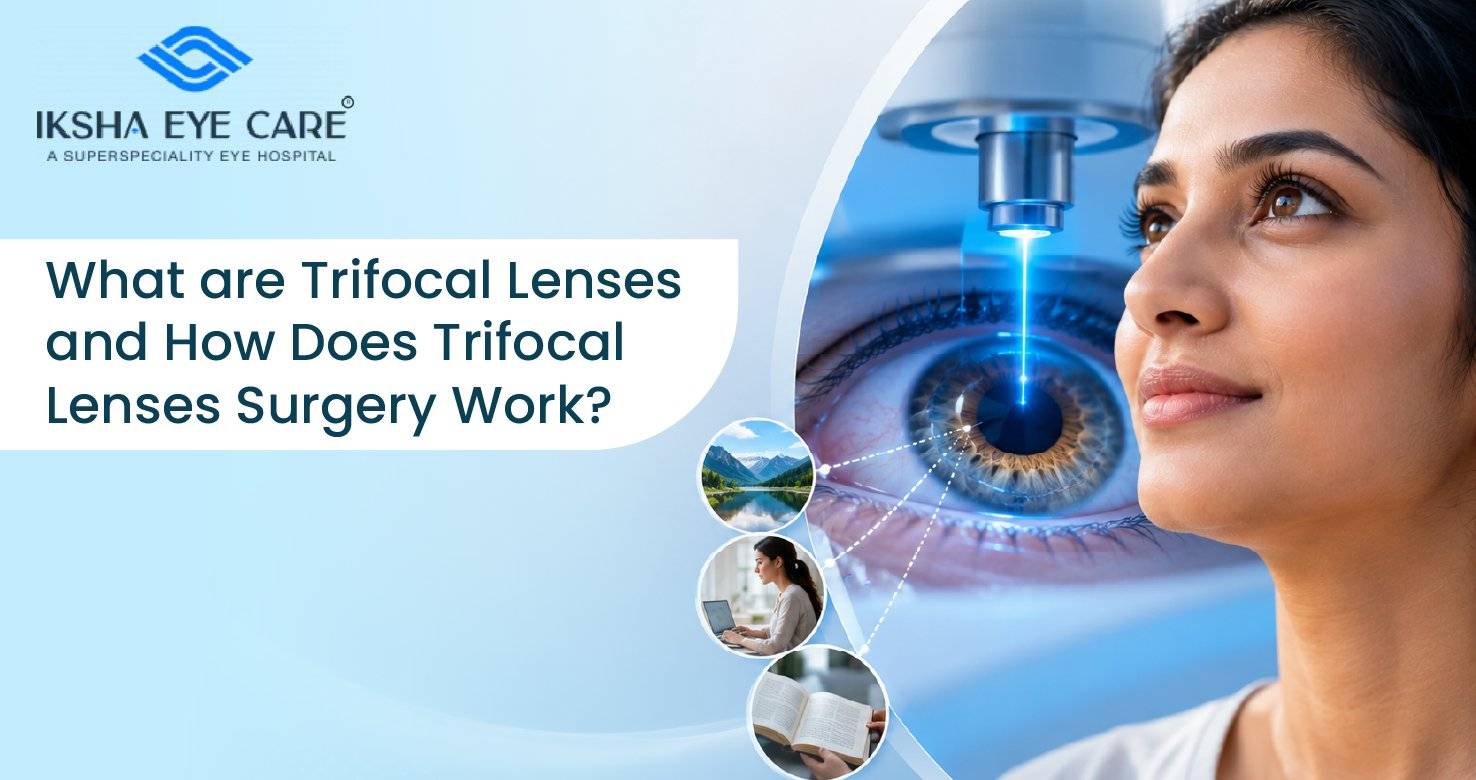
Trifocal lenses are premium intraocular lenses designed to provide useful vision at three primary distances: near, intermediate, and far. They are implanted inside the eye during cataract surgery after the cloudy natural lens is removed.

A conventional monofocal IOL generally provides clear vision at one selected distance. For example, a lens may be selected to provide good distance vision, while reading glasses are still required for close work. Trifocal IOLs use a specialized optical design to distribute incoming light across different focal points.

The three focal ranges are broadly intended for:

  • Distance vision: driving, watching television, and recognizing faces.
  • Intermediate vision: computers, dashboards, and other activities at arm’s length.
  • Near vision: reading books, newspapers, menus, and smartphones.

The exact visual outcome varies from person to person. Trifocal lenses are not simply stronger versions of conventional lenses; they use a different optical design to provide multiple focal points.

How Does Trifocal Lens Surgery Work?

Trifocal lens surgery is generally performed as part of cataract surgery. The cloudy natural lens is removed and replaced with an artificial intraocular lens.

Before surgery, the eye is carefully measured to determine the appropriate IOL power. Measurements may include corneal curvature, eye length, corneal shape, and other parameters needed for lens selection.

During the procedure, the surgeon makes a small opening in the cornea and creates an opening in the capsule surrounding the natural lens. The cloudy lens is then broken into small fragments and removed using an ultrasound-based technique called phacoemulsification. The trifocal IOL is subsequently positioned inside the eye, where it is designed to remain permanently.

The procedure is usually performed under local or topical anesthesia, and most patients can return home the same day, depending on the clinical setting and their individual circumstances.

How Do Trifocal IOLs Provide Vision at Three Distances?

The optical design of a trifocal IOL is what makes it different from a standard monofocal lens.

A trifocal lens contains carefully engineered optical zones or diffractive elements that divide incoming light into different focal points. This allows the brain to receive information corresponding to distance, intermediate, and near vision.

The brain then learns to use the most useful image for the task being performed. This process is known as neuroadaptation.

Because light is distributed between different focal points, some patients may notice visual phenomena such as halos, glare, or rings around lights, particularly at night. These symptoms can become less noticeable as the brain adapts, although they may persist in some individuals.

This is one reason why selecting a trifocal lens should involve more than simply asking whether you want to reduce your dependence on glasses.

Who Is a Good Candidate for Trifocal Lenses?

Trifocal IOLs may be considered for cataract patients who want to improve vision across multiple distances and potentially reduce their need for spectacles.

However, not every cataract patient is an ideal candidate.

Your ophthalmologist may assess:

  • Cataract severity
  • Corneal health
  • Tear-film and dry-eye status
  • Retina and macula
  • Optic nerve health
  • Previous eye surgeries
  • Existing eye diseases
  • Astigmatism
  • Overall visual expectations

Conditions affecting the retina, optic nerve, cornea, or ocular surface can influence whether a multifocal or trifocal lens is appropriate.

A detailed examination is therefore essential before choosing a premium IOL.

Trifocal vs Monofocal Lenses

The main difference between these lenses is the range of vision they are designed to provide.

A monofocal IOL generally focuses light primarily at one distance. Patients may achieve excellent distance vision but need reading glasses for near tasks if the lens is targeted for distance.

A trifocal IOL is designed to provide useful vision at distance, intermediate, and near ranges.

The choice is therefore not simply about which lens is “better.” Monofocal lenses may be preferable for some patients because of their optical characteristics and because they generally have fewer issues with unwanted light phenomena. Trifocal lenses may be attractive to carefully selected patients who place a high value on reducing spectacle dependence.

The decision should be individualized rather than based solely on the lens category.

What Are the Benefits of Trifocal Lens Surgery?

The biggest potential benefit of trifocal IOLs is their ability to provide functional vision across multiple distances.

For an appropriately selected patient, this may make activities such as reading, using a smartphone, working at a computer, and viewing distant objects more convenient without constantly changing glasses.

Other potential advantages include:

  • Reduced dependence on reading glasses
  • Useful intermediate vision
  • Distance vision without a separate pair of spectacles
  • Permanent placement inside the eye
  • Correction of the cataract at the same time

However, spectacle independence is not guaranteed. Some patients may still need glasses for specific activities, particularly in situations requiring very fine near vision or under challenging lighting conditions.

What Are the Possible Limitations?

Trifocal lenses can provide a broader range of vision, but they involve compromises in optical design.

Some patients experience halos, glare, starbursts, or reduced contrast, particularly in low-light conditions. These effects can be noticeable when driving at night or looking directly at bright lights.

Dry eyes and other ocular-surface problems can also affect the quality of vision after surgery.

Another important consideration is that trifocal lenses are generally more demanding in terms of patient selection than standard monofocal lenses. A healthy cornea, retina, and optic nerve are important for achieving a satisfactory visual result.

Patients should therefore discuss both the advantages and potential compromises with their surgeon before deciding.

What Is Recovery Like After Trifocal Lens Surgery?

Recovery after cataract surgery with a trifocal IOL is generally gradual. Vision may be blurry immediately after surgery and can improve over the following days and weeks.

Some patients notice fluctuations in vision while the eye heals. Mild irritation, watering, light sensitivity, or temporary redness can also occur.

Eye drops prescribed by the surgeon should be used exactly as instructed. Patients should also avoid rubbing the operated eye and follow their surgeon’s guidance regarding exercise, swimming, driving, and other activities.

Neuroadaptation may take additional time. Even after the eye has healed physically, the brain may need time to become accustomed to processing images from the trifocal lens.

How Much Does Trifocal Lens Surgery Cost in India?

The cost of trifocal lens surgery in India varies depending on several factors. These may include the type and brand of IOL, diagnostic testing, surgeon and hospital charges, technology used during surgery, and the patient’s individual eye condition.

Because premium IOL selection is personalized, quoting a single universal price can be misleading.

Patients should ask what is included in the quoted package and whether pre-operative testing, medications, follow-up visits, and any additional procedures are included.

More importantly, the cheapest or most expensive lens is not necessarily the best choice. Lens suitability should come before price.

Trifocal Lenses Eye Treatment in Mumbai

Patients searching for trifocal lenses eye treatment in Mumbai should choose an eye-care centre where the decision is based on a detailed examination rather than simply selecting a premium lens.

Iksha Eye Care can be considered by patients in Mumbai who are seeking professional evaluation for cataract surgery and lens options. An ophthalmologist can assess the cataract, cornea, retina, ocular surface, and other factors before discussing whether a trifocal IOL is appropriate.

If you are considering trifocal lenses, discuss your daily visual requirements openly with your eye specialist. Someone who spends long hours reading, works extensively on a computer, drives at night, or has other specific visual demands may have different priorities from another patient.

Conclusion

Trifocal lenses are premium intraocular lenses designed to provide useful vision at distance, intermediate, and near ranges after cataract surgery. They work by using a specialized optical design that creates multiple focal points, potentially reducing dependence on glasses for many everyday activities.

However, trifocal lenses are not automatically suitable for every patient. Eye health, corneal and retinal condition, lifestyle, expectations, and tolerance for possible halos or glare all need to be considered.

A comprehensive eye examination is the best starting point. For patients considering trifocal lenses eye treatment in Mumbai, an ophthalmologist at Iksha Eye Care can evaluate the eyes and discuss appropriate cataract and IOL options based on individual needs.

FAQs

Are trifocal lenses better than monofocal lenses?

Neither is universally better. Trifocal lenses provide multiple focal points and may reduce spectacle dependence, while monofocal lenses generally provide vision at one primary distance and may have fewer unwanted optical phenomena. The appropriate option depends on the patient’s eyes and visual priorities.

Can trifocal lenses eliminate glasses completely?

Trifocal lenses can significantly reduce dependence on glasses for many appropriately selected patients, but complete spectacle independence cannot be guaranteed. Some patients may still require glasses for particular tasks or visual conditions.

How long does it take to adjust to trifocal lenses?

The eye generally heals progressively after surgery, while the brain may take additional time to adapt to the lens’s multifocal optical system. The adjustment period varies between individuals.

Do trifocal lenses cause halos at night?

Some patients may experience halos, glare, or other light-related visual phenomena after receiving a trifocal IOL. These effects may become less noticeable with neuroadaptation but can persist in some patients.

Is trifocal lens surgery the same as LASIK?

No. Trifocal lens implantation is generally performed during cataract surgery, where the natural lens is removed and replaced with an artificial IOL. LASIK reshapes the cornea and does not replace the natural lens.

Who should avoid trifocal lenses?

Patients with certain corneal, retinal, optic nerve, or ocular-surface conditions may not be ideal candidates. A comprehensive examination is necessary before making this decision.

Where can I get trifocal lens eye treatment in Mumbai?

Patients looking for trifocal lenses eye treatment in Mumbai can consider Iksha Eye Care for an ophthalmic evaluation. The suitability of a trifocal IOL should be determined after assessing the health of the eye and the patient’s visual requirements.

SILK vs SMILE vs Contoura Vision: Differences, Benefits, Recovery, Cost & Which Surgery Is Right for You?

SILK vs SMILE vs Contoura Vision

SILK vs SMILE vs Contoura Vision: Which Is Better?

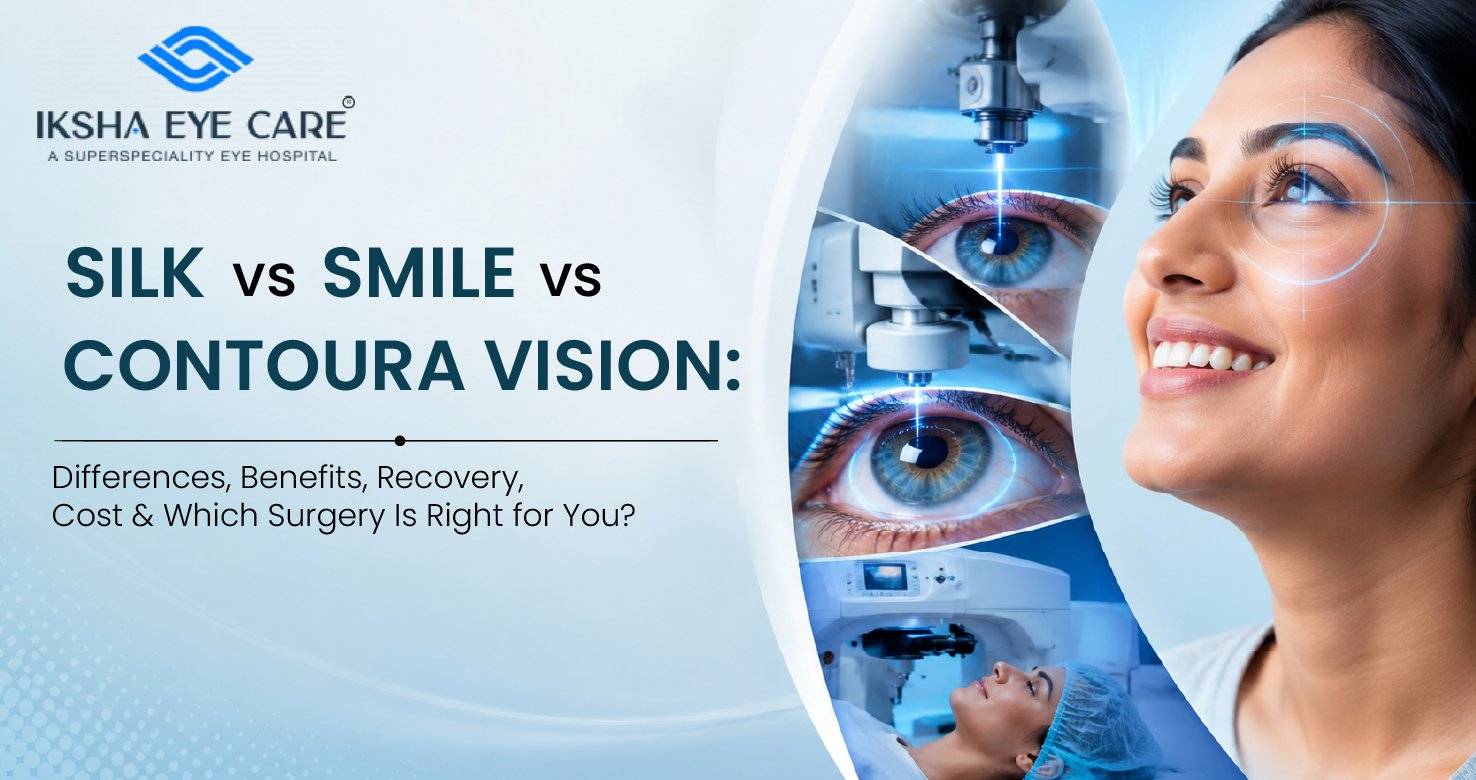
SILK, SMILE, and Contoura Vision are different forms of laser vision correction, and there is no single procedure that is best for everyone. SILK and SMILE use lenticule extraction techniques, while Contoura Vision is a topography-guided LASIK procedure. The right choice depends on factors such as your spectacle power, corneal thickness and shape, tear-film health, age, lifestyle, and the results of your pre-operative eye examination.

SILK and SMILE are flapless procedures, meaning they do not require the creation of a traditional LASIK corneal flap. Contoura Vision uses a femtosecond laser to create the LASIK flap followed by an excimer laser treatment customized using corneal topography. Each approach has potential advantages, and an ophthalmologist should determine suitability after detailed screening.

What Is SILK Eye Surgery?

SILK, or Smooth Incision Lenticule Keratomileusis, is a newer form of lenticule-based laser vision correction. It uses the ELITA platform from Johnson & Johnson Vision and is designed to correct refractive errors by creating and removing a small piece of corneal tissue called a lenticule.

Unlike conventional LASIK, SILK does not involve creating a large corneal flap. Instead, the procedure uses a small incision through which the lenticule is removed.

The smooth-incision design is intended to facilitate controlled lenticule extraction while preserving the surrounding corneal tissue. As with other refractive procedures, however, the outcome depends on individual eye characteristics rather than the technology alone.

Because SILK is newer than SMILE, patients should discuss the available clinical evidence, surgeon experience, potential benefits, limitations, and suitability before making a decision.

What Is SMILE Eye Surgery?

SMILE, or Small Incision Lenticule Extraction, is a minimally invasive laser vision correction procedure used primarily for the correction of myopia, with or without astigmatism, in appropriately selected patients.

During SMILE, a femtosecond laser creates a small lenticule within the cornea. The surgeon then removes the lenticule through a small incision. Because a conventional LASIK flap is not created, SMILE is often described as a flapless vision-correction procedure.

SMILE has been performed clinically for many years and has a substantial body of published evidence supporting its use in appropriately selected patients. It may be particularly attractive to people who participate in activities where a corneal flap could be a concern.

However, SMILE is not suitable for every prescription or every cornea. A detailed examination is necessary to determine whether the procedure is appropriate.

What Is Contoura Vision?

Contoura Vision is a topography-guided form of LASIK. Instead of relying only on the patient’s spectacle prescription, the treatment uses detailed mapping of the corneal surface to customize the laser correction.

The corneal topography identifies variations in the shape and curvature of the cornea. This information is used to plan a personalized excimer-laser treatment.

One important difference is that Contoura Vision involves a LASIK flap, unlike SILK and SMILE. A femtosecond laser is generally used to create the flap, after which the excimer laser reshapes the cornea according to the treatment plan.

Topography-guided LASIK can be an option for appropriately selected patients who want laser vision correction, but suitability depends on corneal measurements, prescription, ocular surface health, and other clinical factors.

SILK vs SMILE vs Contoura Vision: Key Differences

The biggest difference is the way each procedure corrects the cornea.

SILK: Uses lenticule extraction through a small incision and is performed using the ELITA platform.

SMILE: Uses a femtosecond laser to create a corneal lenticule that is removed through a small incision.

Contoura Vision: Uses topography-guided excimer laser treatment after creation of a LASIK flap.

Therefore, SILK and SMILE are broadly similar in their flapless lenticule-based approach, while Contoura Vision follows the LASIK approach with customized corneal surface treatment.

The choice should not be based solely on whether a procedure is newer or more technologically advanced. The most appropriate treatment is the one that matches the patient’s corneal anatomy, refractive error, eye health, and visual requirements.

Benefits of SILK

One potential advantage of SILK is its small-incision, flapless approach. By avoiding a conventional LASIK flap, the procedure may appeal to patients who prefer a lenticule-extraction technique.

Other potential benefits include:

  • Small corneal incision
  • No conventional LASIK flap
  • Potentially rapid visual recovery
  • Treatment through a modern femtosecond laser platform
  • Suitability for selected refractive errors

Because SILK is a relatively newer procedure, patients should have a detailed conversation with their refractive surgeon about available evidence, expected outcomes, risks, and the surgeon’s experience with the technology.

Benefits of SMILE

SMILE has become an established option for selected patients with myopia and astigmatism. Its flapless approach can be particularly appealing to people who are concerned about activities involving physical contact with the eyes.

Potential advantages include:

  • Small incision
  • No conventional corneal flap
  • Generally quick procedure
  • Rapid functional recovery in many patients
  • Established clinical experience

SMILE can still cause temporary dryness, visual fluctuations, glare, halos, or other side effects in some patients. As with every refractive procedure, careful screening is essential.

Benefits of Contoura Vision

The major attraction of Contoura Vision is its customized, topography-guided treatment approach.

Instead of treating every cornea in exactly the same way, the treatment plan incorporates detailed information about the patient’s corneal surface. This can allow the surgeon to customize the correction more precisely for an appropriately selected patient.

Potential benefits include:

  • Topography-guided treatment
  • Customized corneal reshaping
  • LASIK’s established clinical experience
  • Rapid visual recovery in many patients
  • No dependence on glasses or contact lenses for many successfully treated patients

However, Contoura Vision involves a LASIK flap, and the suitability of LASIK depends on corneal thickness, shape, tear-film stability, prescription, and overall eye health.

SILK vs SMILE vs Contoura Vision Recovery

Recovery varies from person to person, but all three procedures are designed to provide relatively rapid visual rehabilitation.

After SILK or SMILE, patients may experience temporary watering, mild discomfort, light sensitivity, hazy vision, or fluctuating vision. Vision generally improves as the cornea heals.

After Contoura Vision, vision can also improve rapidly, although patients may experience temporary dryness, glare, halos, or fluctuating vision during the healing period.

Following post-operative instructions is essential. Patients should use prescribed eye drops as directed, avoid rubbing their eyes, attend follow-up appointments, and follow their surgeon’s recommendations regarding swimming, makeup, exercise, and other activities.

SILK vs SMILE vs Contoura Vision Cost in India

The cost of SILK, SMILE, and Contoura Vision in India varies significantly. There is no single price that applies to every patient or hospital.

Factors that can affect the total cost include:

  • Technology and laser platform
  • Surgeon’s experience
  • Location of the eye centre
  • Pre-operative testing
  • Type of procedure
  • Follow-up care
  • Individual clinical requirements

SILK may have different pricing from established procedures because it uses newer technology and specialized equipment. Rather than selecting a procedure solely because it is cheaper or more expensive, patients should compare the technology, surgeon expertise, screening process, aftercare, and expected suitability.

Which Surgery Is Right for You?

There is no universal winner in the SILK vs SMILE vs Contoura Vision comparison.

SILK may be considered by patients who are suitable for a newer lenticule-extraction procedure and prefer a flapless approach. SMILE may be appropriate for selected patients with suitable myopia or myopic astigmatism who want an established small-incision procedure. Contoura Vision may be considered when topography-guided LASIK is appropriate and customized corneal treatment is desired.

The final decision should follow a comprehensive refractive evaluation. This typically includes checking the spectacle prescription, corneal thickness, corneal topography or tomography, tear-film health, pupil characteristics, eye pressure, retinal health, and other factors.

Conclusion

SILK, SMILE, and Contoura Vision represent different approaches to reducing dependence on glasses and contact lenses. SILK and SMILE use flapless lenticule extraction, whereas Contoura Vision uses topography-guided LASIK with a corneal flap. Each technology has its own potential benefits, limitations, recovery profile, and suitability criteria.

The newest technology is not automatically the best technology for every patient. A detailed eye examination and discussion with an experienced refractive surgeon are essential before making a decision. The objective should be to select the procedure that offers an appropriate balance of safety, visual goals, corneal health, and long-term expectations.

FAQs

1. Is SILK better than SMILE?

Neither procedure is universally better. SILK and SMILE both use flapless lenticule extraction, but they use different technology platforms. The appropriate choice depends on the patient’s prescription, corneal characteristics, eye health, and surgeon’s assessment.

2. Is Contoura Vision safer than SMILE?

Both procedures can be safe and effective in appropriately selected patients. Contoura Vision is a topography-guided LASIK procedure, while SMILE is a flapless lenticule-extraction procedure. Individual suitability is more important than choosing one procedure as universally safer.

3. Which has faster recovery: SILK, SMILE, or Contoura Vision?

All three can provide relatively rapid visual recovery, but recovery varies between patients. The speed of visual improvement depends on the procedure, individual healing response, prescription, ocular surface health, and other factors.

4. How much does SILK, SMILE, or Contoura Vision cost in India?

Costs vary by city, eye centre, technology, surgeon, pre-operative testing, and follow-up requirements. Patients should obtain a personalized quotation after their eye evaluation.

5. Can someone with uveitis undergo LASIK, SMILE, or SILK?

Active uveitis generally requires evaluation and control before elective refractive surgery is considered. Anyone with current or previous uveitis should disclose this history to the refractive surgeon and undergo appropriate assessment.

How to Stop Wearing Glasses Naturally: Natural Methods vs. Medical Treatments

How to stop wearing glasses naturally

Can You Stop Wearing Glasses Naturally?

How to stop wearing glasses naturally is a common question among people who are tired of depending on spectacles every day. However, whether you can stop wearing glasses depends on why you need them in the first place. Refractive errors such as myopia (short-sightedness), hyperopia (long-sightedness), and astigmatism occur because of the way the eye focuses light, and there is currently no proven eye exercise, food, or home remedy that permanently removes these refractive errors.

That does not mean healthy habits are useless. A balanced diet, adequate sleep, regular outdoor activity, appropriate screen habits, and protection from excessive ultraviolet exposure can support overall eye health. For people who want to reduce or eliminate their dependence on glasses, medically established options such as LASIK, SMILE, and other refractive procedures may be considered after a detailed eye examination.

Why Do You Need Glasses?

Glasses correct a refractive error by changing the way incoming light is focused onto the retina. In myopia, distant objects may appear blurry because light focuses in front of the retina. Hyperopia can make nearby objects difficult to see clearly, while astigmatism can cause blurred or distorted vision at different distances.

Presbyopia is different. It is an age-related change in the eye’s ability to focus on nearby objects and commonly becomes noticeable in middle age. Reading glasses, progressive lenses, contact lenses, or selected surgical options may be used depending on the individual’s needs.

Understanding the underlying problem is important because a method that supports general eye health cannot necessarily change the eye’s optical structure. This is why an eye examination should come before trying to permanently reduce dependence on spectacles.

How to Improve Your Eyesight When You Have Glasses

If you are wondering how to improve your eyesight when you have glasses, the first step is to make sure your prescription is accurate and up to date. Wearing correctly prescribed glasses does not make your eyes weaker or increase your dependence on spectacles. In fact, clear vision helps you perform everyday activities more comfortably and safely.

Lifestyle habits can also support visual comfort. If you spend many hours working on a computer or phone, follow the 20-20-20 approach: after approximately 20 minutes of near-screen work, look at something around 20 feet away for about 20 seconds. Frequent blinking, appropriate screen brightness, good lighting, and maintaining a comfortable viewing distance can also reduce digital eye strain.

For children and teenagers, spending more time outdoors is particularly important because regular outdoor exposure has been associated with a lower risk of developing or progressing myopia. These habits support eye health, but they should not be presented as a guaranteed way to reverse an existing prescription.

Natural Ways to Improve Eyesight Without Glasses

People searching for natural ways to improve eyesight without glasses will find many claims online, but it is important to separate evidence-based eye care from unsupported promises.

Healthy habits can help maintain good visual function. They include eating a varied diet, staying physically active, managing conditions such as diabetes and high blood pressure, avoiding smoking, getting adequate sleep, and protecting the eyes from excessive UV exposure.

These measures can support the health of the retina, optic nerve, and other eye structures. They cannot, however, reliably reshape the cornea or eyeball sufficiently to eliminate myopia, hyperopia, or astigmatism.

If your goal is specifically to become less dependent on glasses, an ophthalmologist can assess your prescription, corneal health, tear film, eye pressure, and overall eye condition before discussing appropriate options.

Can Eye Exercises Remove Glasses?

The idea of an eye exercise to remove glasses is widely discussed, particularly on social media. Exercises may help with certain aspects of visual comfort or eye coordination, but there is no established exercise that permanently eliminates common refractive errors such as myopia or astigmatism.

For example, taking regular breaks from close-up work can reduce eye fatigue. Focusing at different distances may also make prolonged near work feel more comfortable for some people. These practices should be viewed as habits for reducing visual strain rather than a replacement for corrective treatment.

If someone experiences sudden changes in vision, double vision, persistent eye pain, flashes, or a sudden increase in floaters, exercise should not be used as a substitute for professional assessment.

Foods to Improve Eyesight Without Glasses

Searching for foods to improve eyesight without glasses often leads to claims that particular foods can remove a spectacle prescription. There is no food that has been proven to permanently correct refractive errors.

Nevertheless, nutrition plays an important role in maintaining overall eye health. A varied diet containing leafy green vegetables, colorful fruits and vegetables, nuts, seeds, fish, and other nutrient-rich foods can contribute to a healthy diet.

Nutrients such as vitamin A, vitamin C, vitamin E, zinc, and certain carotenoids have roles in normal eye function. However, supplements should not automatically be taken in high doses. Some supplements can interact with medications or may be inappropriate for certain individuals.

The goal should therefore be nutritional support for healthy eyes, rather than expecting a particular food to eliminate the need for glasses.

When Can Medical Treatment Reduce Dependence on Glasses?

For adults who want to reduce their dependence on spectacles, refractive surgery may be an option depending on their age, prescription, corneal thickness, eye health, and overall suitability.

LASIK uses a laser to reshape the cornea so that light can focus more accurately on the retina. SMILE is another laser vision correction procedure that uses a small corneal incision to remove a precisely created tissue lenticule. Other procedures may be considered for selected patients.

These treatments are not suitable for everyone. A comprehensive pre-operative evaluation is necessary to determine whether the eyes are healthy enough for surgery and which procedure, if any, is appropriate.

It is also important to understand that no procedure can guarantee perfect vision for every patient or prevent future age-related changes such as presbyopia.

Glasses, Contact Lenses or Surgery: Which Is Right for You?

There is no universally best method of correcting vision. Glasses remain a safe, simple, and effective option for many people. Contact lenses can provide a wider field of vision but require careful hygiene and responsible use.

Refractive surgery may appeal to people who want greater freedom from spectacles or contact lenses. However, the decision should be based on an ophthalmologist’s assessment rather than advertising claims or the experience of another person.

Factors such as prescription stability, corneal measurements, dry-eye symptoms, eye health, lifestyle, occupation, and expectations all matter when selecting a treatment.

Conclusion

So, how to stop wearing glasses naturally? Healthy lifestyle habits can support overall eye health and reduce visual discomfort, but there is currently no scientifically established exercise, food, or natural remedy that permanently removes common refractive errors.

If you want to reduce your dependence on glasses, the more reliable approach is to understand the cause of your prescription and discuss suitable options with an eye-care professional. Depending on your individual eye health, glasses, contact lenses, LASIK, SMILE, or another treatment may be appropriate. A proper examination is the best starting point for making that decision safely.

FAQs

Can eye exercises remove my spectacle number?

There is no established eye exercise that permanently removes common refractive errors such as myopia, hyperopia, or astigmatism. Eye breaks and focusing habits may help reduce visual fatigue.

Can food improve eyesight without glasses?

A nutritious diet supports overall eye health, but no specific food has been proven to eliminate the need for glasses caused by a refractive error.

How can I improve my eyesight when I have glasses?

Use the correct prescription, maintain healthy screen habits, take regular visual breaks, spend time outdoors, eat a balanced diet, protect your eyes from UV exposure, and attend regular eye examinations.

Is LASIK better than natural methods for removing glasses?

Natural methods can support eye health but do not reliably correct refractive errors. LASIK and other refractive procedures can reduce dependence on glasses in appropriately selected patients, but suitability must be determined through an eye examination.

Can I get treatment for uveitis in Mumbai?

Yes. People seeking uveitis eye treatment in Mumbai should undergo an ophthalmic evaluation because uveitis requires diagnosis and treatment based on its underlying cause. Iksha Eye Care can be considered for professional eye evaluation and treatment.

How to Cure Uveitis Permanently: Causes, Treatment, Recovery & Long-Term Eye Care

How to Cure Uveitis Permanently

Can Uveitis Be Cured Permanently?

Can uveitis be cured permanently? There is no single answer because uveitis is not one specific disease. It is inflammation affecting the uvea, the middle layer of the eye, and its treatment depends on the underlying cause, severity, and part of the eye involved. Some cases are temporary and may resolve completely after appropriate treatment, while others can become recurrent or chronic and require long-term monitoring.

The main goal of uveitis treatment is to control inflammation quickly, identify and treat its underlying cause, protect vision, and prevent complications. Depending on the situation, treatment may involve corticosteroid eye drops, injections, oral medicines, or other immunosuppressive or antimicrobial medicines. Regular eye examinations are important even after symptoms improve because inflammation can sometimes return without causing obvious symptoms.

What Is Uveitis and What Causes It?

Uveitis occurs when inflammation develops in the uveal tract, which includes the iris, ciliary body, and choroid. It can affect one or both eyes and may develop suddenly or gradually.

The causes of uveitis can vary considerably. In some patients, inflammation is associated with autoimmune or inflammatory conditions such as rheumatoid arthritis, ankylosing spondylitis, sarcoidosis, or inflammatory bowel disease. In other cases, infections such as tuberculosis, herpes viruses, or certain parasitic infections may be involved.

Sometimes, despite detailed investigations, doctors cannot identify a definite underlying cause. This is known as idiopathic uveitis.

Symptoms may include eye redness, pain, light sensitivity, blurred vision, floaters, or reduced vision. Because these symptoms can also occur with other eye conditions, proper examination by an ophthalmologist is essential rather than attempting to diagnose the condition based only on symptoms.

How to Cure Uveitis Permanently: What Treatment Actually Aims to Do

When people search for how to cure uveitis permanently, they are usually looking for a treatment that prevents the inflammation from ever returning. Unfortunately, there is no universal treatment that guarantees this outcome for every patient.

Treatment is instead tailored to the cause and type of uveitis. For inflammation located primarily in the front of the eye, corticosteroid eye drops may be prescribed. More severe or deeper inflammation may require corticosteroid injections, oral medication, or medicines that modify the immune response.

If an infection is responsible, appropriate antimicrobial treatment may be necessary. Treating an associated systemic inflammatory disease can also be important when uveitis is linked to an autoimmune condition.

The earlier inflammation is identified and controlled, the better the opportunity to protect the structures responsible for clear vision.

Why Does Uveitis Keep Coming Back?

Why does uveitis keep coming back? Recurrence can occur for several reasons, and understanding the underlying cause is important.

Some forms of uveitis are associated with chronic inflammatory or autoimmune conditions. If the underlying condition remains active, inflammation in the eye may return. Certain types of uveitis can also naturally follow a recurrent pattern, with periods of inflammation followed by periods of remission.

Another possibility is that inflammation has not been completely controlled or that treatment was reduced too quickly. This is why patients should follow their ophthalmologist’s medication schedule rather than stopping steroid eye drops or other prescribed medicines once symptoms improve.

Recurrent episodes should not simply be treated as isolated attacks. A pattern of repeated inflammation may require additional investigation to determine whether an underlying systemic or infectious condition is contributing to the problem.

What Are the Signs That Uveitis Is Healing?

Knowing the signs which show uveitis is healing can help patients understand whether treatment is working, but symptoms alone cannot confirm that inflammation has completely disappeared.

Common improvements may include reduced eye redness, less pain, decreased sensitivity to light, clearer vision, and fewer visual disturbances such as floaters. Patients may begin feeling more comfortable as inflammation settles.

However, feeling better does not necessarily mean the eye has completely recovered. Uveitis can sometimes remain active even when symptoms have become mild. An ophthalmologist may need to examine the eye under magnification and assess inflammatory cells or other changes before confirming that the inflammation has adequately responded to treatment.

For this reason, follow-up examinations are an important part of recovery. Medication should generally be reduced or stopped only according to the treating doctor’s instructions.

What Happens If Uveitis Is Left Untreated?

Untreated or poorly controlled uveitis can potentially damage important structures of the eye. The risks depend on the location, duration, and severity of inflammation.

Possible complications include cataracts, glaucoma, macular edema, retinal complications, and permanent vision impairment. Repeated inflammation can also cause structural changes that become more difficult to treat over time.

This is why persistent eye pain, redness, light sensitivity, blurred vision, or new floaters should not be ignored. Prompt evaluation can help determine whether the symptoms are caused by uveitis or another eye condition.

How Long Does Uveitis Take to Recover?

Recovery time varies significantly between patients. Some episodes of anterior uveitis respond to treatment over several weeks, while more complicated or deeper forms may require treatment for considerably longer.

The underlying cause also affects recovery. An infection-related case may follow a different treatment pathway from uveitis associated with an autoimmune disease. The response to medication, severity of inflammation, and presence of complications can all influence the recovery period.

Patients should therefore avoid comparing their recovery timeline with someone else’s experience. A gradual reduction in inflammation under medical supervision is generally more important than trying to recover within a specific number of days.

Long-Term Eye Care After Uveitis

Long-term care is particularly important for patients who have experienced recurrent or chronic uveitis. Regular ophthalmic examinations can help identify inflammation or complications before significant vision changes develop.

Patients should also tell their eye specialist about any history of autoimmune disease, infections, previous episodes of uveitis, or medications they are taking. Keeping records of previous episodes can help doctors identify patterns and determine whether additional investigations are appropriate.

Protecting overall health is also relevant. If uveitis is associated with an underlying systemic inflammatory condition, coordination between an ophthalmologist and the appropriate medical specialist may be necessary.

Most importantly, patients should not restart, stop, or change steroid or other prescription medicines without medical guidance.

Uveitis Eye Treatment in Mumbai

For patients looking for uveitis eye treatment in Mumbai, a detailed ophthalmic evaluation is an important first step. Because uveitis can have infectious, inflammatory, autoimmune, or unexplained causes, treatment should be based on an individual assessment rather than a standard treatment plan.

Iksha Eye Care can be considered for professional eye evaluation and treatment in Mumbai. Patients experiencing persistent redness, eye pain, light sensitivity, blurred vision, or unusual floaters should seek an ophthalmic assessment to determine the cause and appropriate management.

The objective of treatment is not simply to make symptoms disappear. It is to control inflammation, identify contributing factors where possible, protect vision, and monitor the eyes over the long term.

Conclusion

So, can uveitis be cured permanently? In some cases, an episode can resolve completely with appropriate treatment, while other forms can recur or require long-term management. The possibility of recurrence depends largely on the type and underlying cause of the condition.

Recognizing symptoms early, receiving the correct diagnosis, completing treatment as prescribed, and attending follow-up examinations can all help reduce the risk of vision-threatening complications. If symptoms return after a period of improvement, medical evaluation should not be delayed. With appropriate management and regular monitoring, many patients with uveitis can maintain good eye health and protect their vision.

FAQs

1. Can uveitis be cured permanently?

Some episodes of uveitis can resolve completely with treatment, but there is no universal permanent cure for every type. Recurrence depends on the underlying cause and type of uveitis.

2. Why does uveitis keep coming back?

Uveitis may recur because of autoimmune or inflammatory diseases, infections, the natural recurrent pattern of certain types, or incomplete control of inflammation. Further evaluation may be required when episodes repeatedly return.

3. What are the signs which show uveitis is healing?

Reduced redness, pain, light sensitivity, blurred vision, and floaters may indicate improvement. However, only an eye examination can determine whether inflammation has actually resolved.

4. How long does uveitis take to heal?

Recovery varies depending on the type and severity of uveitis and its underlying cause. Some cases improve within weeks, while recurrent or complicated cases may require longer-term treatment and monitoring.

5. Where can I get uveitis eye treatment in Mumbai?

Patients seeking uveitis eye treatment in Mumbai can consider Iksha Eye Care for an ophthalmic evaluation. A specialist can assess symptoms, determine the likely cause, and recommend appropriate treatment and follow-up.

What is Laser Assisted Cataract Surgery? Is it Safer than Conventional Micro Incision Cataract Surgery?

Introduction: Understanding Modern Cataract Surgery Options

Cataracts are one of the leading causes of blurred vision and vision loss worldwide, especially among older adults. With advancements in ophthalmology, cataract treatment has evolved significantly beyond traditional surgical methods. Today, patients are increasingly exploring advanced procedures such as Laser Assisted Cataract Surgery and Micro Incision Cataract Surgery (MICS) to achieve safer surgery, faster recovery, and better visual outcomes.

One of the most common questions patients ask is whether laser-assisted cataract surgery is actually safer than conventional micro incision cataract surgery. Since both procedures are considered modern and effective, understanding the differences becomes important before making a treatment decision.

Advanced eye care centers now offer multiple cataract surgery technologies depending on the patient’s eye condition, lens requirements, and visual expectations. While both procedures aim to remove the cloudy lens and restore clear vision, the techniques used are different. The choice between them depends on several factors including precision, technology, eye health, surgeon expertise, and patient preference.

What is Laser Assisted Cataract Surgery?

Laser Assisted Cataract Surgery is an advanced cataract procedure that uses femtosecond laser technology to automate certain critical steps of the surgery with high precision. Unlike conventional surgery, where the surgeon performs most steps manually, the laser system assists in creating incisions and softening the cataract before removal.

The procedure begins with detailed imaging of the eye. This imaging system maps the eye’s structure and helps customize the treatment according to the patient’s anatomy. The laser then performs several key surgical steps including:

  • Creating corneal incisions
  • Opening the lens capsule
  • Softening the cataract

After these laser-assisted steps, the surgeon removes the cataract and implants an artificial intraocular lens (IOL).

What is Conventional Micro Incision Cataract Surgery (MICS)?

Micro Incision Cataract Surgery, commonly known as MICS, is a highly advanced manual cataract surgery technique performed through extremely small incisions. In this procedure, the surgeon removes the cataract using ultrasound energy and implants a foldable intraocular lens.

MICS is considered minimally invasive because the incision size is very small, usually around 1.8 to 2.2 mm. Smaller incisions can lead to:

  • Faster healing
  • Reduced surgical trauma
  • Lower risk of infection
  • Minimal induced astigmatism

Experienced cataract surgeons commonly perform MICS due to its excellent safety profile and predictable outcomes. Despite being a manual procedure, modern MICS techniques are highly refined and widely trusted.

Laser Assisted Cataract Surgery vs MICS: Key Differences

Both procedures are designed to improve vision safely and effectively, but there are important differences in how they are performed.

FeatureLaser Assisted Cataract SurgeryMicro Incision Cataract Surgery
Technology UsedFemtosecond laser + phaco surgeryPhaco microsurgical technique
PrecisionHighly automated and image-guidedSurgeon-dependent precision
Incision CreationLaser-createdManual micro incision
Cataract SofteningLaser-assistedUltrasound-assisted
RecoveryUsually fastUsually fast
CostHigherComparatively lower
CustomizationHighly customizedCustomized by surgeon expertise

Laser-assisted surgery focuses heavily on automation and imaging precision, while MICS relies more on the surgeon’s experience and microsurgical skill.

Is Laser Assisted Cataract Surgery Safer?

The safety of cataract surgery depends on multiple factors, including:

  • Surgeon expertise
  • Technology quality
  • Patient eye condition
  • Pre-operative assessment
  • Post-operative care

Laser-assisted cataract surgery offers certain advantages in terms of precision. The laser can create highly accurate incisions and soften the cataract before removal, potentially reducing ultrasound energy used during surgery. This may help minimize stress on the eye in some patients.

However, conventional MICS is also considered extremely safe when performed by an experienced cataract surgeon. Modern micro incision techniques have demonstrated excellent success rates and low complication rates worldwide.

Current ophthalmology research suggests that both procedures are safe and effective. Laser-assisted surgery may provide additional precision benefits for certain patients, especially those:

  • Choosing premium intraocular lenses
  • Having astigmatism correction needs
  • Seeking highly customized outcomes

At the same time, MICS remains one of the most trusted and widely performed cataract procedures globally because of its proven reliability and affordability.

Benefits of Laser Assisted Cataract Surgery

Enhanced Precision

Laser-guided technology allows for highly accurate surgical steps.

Customized Treatment

The surgery can be tailored according to the patient’s eye anatomy.

Potentially Reduced Ultrasound Energy

The laser softens the cataract before removal, which may reduce energy exposure inside the eye.

Improved Lens Positioning

Precise capsule opening can help improve intraocular lens alignment.

Advanced Astigmatism Correction

Laser systems can assist in managing corneal astigmatism.

Benefits of Micro Incision Cataract Surgery (MICS)

Smaller Incision Size

Tiny incisions support quicker healing and less tissue disturbance.

Excellent Safety Record

MICS is globally recognized for its predictable outcomes and safety.

Faster Visual Recovery

Most patients regain functional vision quickly.

Cost-Effective

MICS is generally more affordable than laser-assisted procedures.

Minimal Surgical Trauma

Smaller incisions reduce inflammation and discomfort.

Which Cataract Surgery is Right for You?

The best cataract surgery option depends on:

  • Cataract density
  • Corneal health
  • Budget considerations
  • Visual expectations
  • Need for premium lenses
  • Existing eye conditions

Patients seeking highly personalized and technology-assisted treatment may prefer laser-assisted cataract surgery. Those looking for a trusted, effective, and cost-efficient procedure often choose MICS.

A comprehensive eye examination by an experienced ophthalmologist is essential to determine the most suitable treatment approach.

Recovery After Cataract Surgery

Recovery after both laser-assisted cataract surgery and MICS is usually smooth. Most patients notice improved vision within a few days.

Doctors generally recommend:

  • Using prescribed eye drops regularly
  • Avoiding dust and water exposure
  • Wearing protective eyewear
  • Attending follow-up appointments

Complete healing may take a few weeks depending on individual eye conditions.

Conclusion

Both Laser Assisted Cataract Surgery and Micro Incision Cataract Surgery (MICS) represent advanced approaches to cataract treatment with high safety and success rates. Laser-assisted surgery offers enhanced precision and customization through advanced technology, while MICS continues to deliver reliable outcomes with minimally invasive techniques. The right choice depends on individual eye health, visual goals, and surgeon recommendations. Consulting an experienced ophthalmologist is the best way to determine which cataract procedure is most suitable for achieving clear and comfortable vision.

FAQs

Q1: What is Laser Assisted Cataract Surgery?
Laser Assisted Cataract Surgery uses femtosecond laser technology to perform key steps of cataract surgery with enhanced precision.

Q2: Is laser cataract surgery safer than MICS?
Both procedures are considered safe. Laser-assisted surgery offers additional precision, while MICS has an excellent long-term safety record.

Q3: What is the difference between laser cataract surgery and MICS?
Laser-assisted surgery uses laser technology for certain steps, whereas MICS is a manual microsurgical procedure using very small incisions.

Q4: Is recovery faster with laser cataract surgery?
Both procedures typically offer fast recovery, although recovery experiences may vary by patient.

Q5: Who is eligible for laser-assisted cataract surgery?
Patients seeking advanced precision, premium lenses, or customized vision correction may be suitable candidates after evaluation.

What Is Robotic Cataract Surgery? Is It Available in India?

Quick Answer

Robotic cataract surgery is an advanced form of cataract treatment that combines robotic guidance, artificial intelligence, image-based planning, and surgeon-controlled precision to assist during key stages of cataract surgery. While robotic-assisted cataract surgery is gaining attention globally, its availability remains limited. One of the most notable developments in this field is the Polaris robotic platform, which has introduced a new level of precision and automation in cataract procedures.

Introduction

Cataract surgery is one of the most commonly performed and successful surgical procedures worldwide. Over the years, cataract treatment has evolved significantly—from larger incision techniques to modern phacoemulsification (phaco surgery) and laser-assisted procedures. Today, the latest advancement generating interest among ophthalmologists and patients is robotic cataract surgery.

The concept of robotic assistance in eye surgery represents a major step forward in surgical precision. By combining advanced imaging, robotic guidance, and surgeon expertise, robotic systems aim to improve consistency and accuracy during delicate surgical steps.

Interest in robotic cataract surgery increased significantly after Dr. Uday Devgan, a renowned cataract surgeon in the United States, performed one of the first robotic cataract procedures using the Polaris platform. This milestone highlighted the potential role of robotics in the future of ophthalmology.

As patients increasingly search for safer and more advanced treatment options, many are asking whether robotic cataract surgery is available in India and how it compares with existing cataract surgery techniques.

What Is Robotic Cataract Surgery?

Robotic cataract surgery refers to cataract procedures performed with the assistance of a robotic platform designed specifically for ophthalmic surgery. Unlike conventional surgery, where all movements are manually controlled by the surgeon, robotic systems provide enhanced guidance and precision during critical surgical steps.

The surgeon remains fully in control throughout the procedure. The robotic platform acts as an advanced surgical assistant by helping improve accuracy and consistency.

Modern robotic systems use:

  • High-resolution imaging
  • Real-time eye tracking
  • Advanced surgical planning
  • Precision-guided instrumentation
  • AI-supported workflow integration

The goal is not to replace the surgeon but to enhance surgical precision while maintaining complete surgeon oversight.

The Polaris Robotic Cataract Surgery System

One of the most discussed innovations in robotic cataract surgery is the Polaris system.

Polaris was developed to bring robotic precision into cataract surgery by assisting surgeons with key surgical maneuvers. The platform integrates imaging technology, robotic controls, and advanced planning capabilities to support highly precise surgical execution.

A significant milestone for the technology occurred when Dr. Uday Devgan in the United States performed one of the world’s first robotic cataract surgeries using the Polaris platform. This achievement demonstrated how robotic assistance could potentially enhance the future of cataract treatment.

The system is designed to support accuracy during critical stages of surgery while allowing the surgeon to remain actively involved throughout the procedure.

How Is Robotic Cataract Surgery Different from Laser Cataract Surgery?

Patients often confuse robotic cataract surgery with laser-assisted cataract surgery, but the two technologies are fundamentally different.

Laser-assisted cataract surgery uses a femtosecond laser to perform specific parts of the procedure, such as creating corneal incisions, opening the lens capsule, and fragmenting the cataract before removal.

Robotic cataract surgery, on the other hand, involves a robotic platform that assists the surgeon with real-time precision and control during various stages of the operation. Rather than simply using a laser to automate certain steps, robotic systems provide guidance, stability, imaging integration, and enhanced surgical accuracy.

In simple terms, laser-assisted surgery focuses on automating selected procedural steps using laser technology, while robotic cataract surgery introduces an advanced robotic interface that supports the surgeon throughout the procedure.

How Is Robotic Cataract Surgery Different from Phaco Surgery?

Many patients compare robotic cataract surgery with conventional phacoemulsification (phaco surgery), which remains the most widely performed cataract procedure globally.

In phaco surgery, the surgeon manually operates specialized instruments to create incisions, access the cataract, break it into tiny fragments using ultrasound energy, and implant the intraocular lens.

Robotic cataract surgery builds upon this foundation by introducing robotic assistance, image-guided planning, and enhanced precision controls. While phaco surgery relies heavily on the surgeon’s manual skills and experience, robotic systems are designed to improve consistency and support precise execution of surgical movements.

It is important to understand that robotic cataract surgery is not replacing phaco technology. Instead, it represents an evolution of cataract surgery that combines modern robotics with established cataract treatment principles.

Is Robotic Cataract Surgery Available in India?

Robotic cataract surgery remains a relatively new development in ophthalmology. While awareness is growing, widespread adoption is still in its early stages compared to conventional phaco and laser-assisted cataract surgery.

India is recognized globally for adopting advanced ophthalmic technologies and has consistently been at the forefront of cataract surgery innovation. As robotic cataract platforms continue to evolve and regulatory approvals expand, interest among eye surgeons and institutions is expected to increase.

Patients seeking advanced cataract treatment should consult experienced cataract specialists to understand the latest available technologies and determine which approach is most suitable for their individual eye condition.

Potential Benefits of Robotic Cataract Surgery

The growing interest in robotic cataract surgery is driven by several potential advantages.

These may include:

  • Enhanced surgical precision
  • Improved consistency
  • Advanced imaging integration
  • Greater control during delicate procedures
  • Reduced variability in critical surgical steps
  • Support for complex cataract cases

As the technology continues to evolve, further clinical research and long-term outcomes will help define its future role in cataract treatment.

Who May Benefit from Advanced Cataract Surgery Technologies?

Not every cataract patient requires the latest technology. The most appropriate treatment depends on several factors, including:

  • Cataract density
  • Corneal health
  • Retinal condition
  • Visual requirements
  • Lifestyle needs
  • Existing eye disorders

An experienced cataract surgeon evaluates these factors before recommending a treatment approach.

Whether using conventional phaco surgery, laser-assisted techniques, or emerging robotic technologies, the primary goal remains the same: restoring vision safely and effectively.

The Future of Robotic Cataract Surgery

Robotics has already transformed multiple surgical specialties, including orthopedics, urology, and general surgery. Ophthalmology is now beginning to explore similar advancements.

The successful use of platforms such as Polaris demonstrates that robotic assistance may become an important part of future cataract surgery. As technology advances, robotic systems could help improve precision, standardization, and surgical outcomes even further.

While widespread availability may take time, robotic cataract surgery represents an exciting development in the ongoing evolution of vision correction and cataract care.

Conclusion

Robotic cataract surgery represents one of the newest advancements in ophthalmology, combining surgeon expertise with robotic precision and advanced imaging technology. The introduction of the Polaris platform and pioneering procedures performed by Dr. Uday Devgan have highlighted the potential of robotics in cataract treatment. While conventional phaco surgery and laser-assisted cataract surgery continue to be highly effective and widely used, robotic systems may play an increasingly important role in the future of eye care. As technology continues to evolve, patients can expect further innovations aimed at enhancing precision, safety, and visual outcomes in cataract surgery.

FAQs

Q1. What is robotic cataract surgery?
Robotic cataract surgery is an advanced cataract treatment approach that combines robotic assistance, imaging technology, and surgeon-controlled precision during the procedure.

Q2. Who performed the first robotic cataract surgery?
One of the earliest robotic cataract surgeries using the Polaris platform was performed by renowned cataract surgeon Dr. Uday Devgan in the United States.

Q3. How is robotic cataract surgery different from laser cataract surgery?
Laser-assisted cataract surgery uses a femtosecond laser for specific surgical steps, while robotic cataract surgery utilizes robotic guidance and precision control throughout the procedure.

Q4. How is robotic cataract surgery different from phaco surgery?
Phaco surgery uses ultrasound technology and manual surgical techniques, whereas robotic cataract surgery incorporates robotic assistance and advanced imaging to enhance precision.

Q5. Is robotic cataract surgery available in India?
Robotic cataract surgery is an emerging technology, and availability may vary. Patients should consult qualified eye specialists to learn about the latest treatment options available.

Young Professionals and Digital Eye Strain: When Is Cataract Surgery Actually Needed?

Quick Answer

Digital eye strain and cataracts are two different eye conditions. While young professionals increasingly experience eye fatigue, blurred vision, headaches, and dryness due to prolonged screen use, these symptoms do not typically require cataract surgery. Cataract surgery is recommended when the natural lens of the eye becomes cloudy and begins affecting daily activities and vision quality. Understanding the difference between digital eye strain and cataracts can help individuals seek the right treatment at the right time.

Introduction

Modern work culture has transformed the way people use their eyes. From laptops and smartphones to tablets and multiple-monitor workstations, young professionals spend countless hours focusing on digital screens. As a result, complaints related to eye discomfort have increased significantly over the past decade.

Many individuals experience symptoms such as tired eyes, blurred vision, headaches, watering eyes, neck pain, and difficulty focusing after extended screen use. These issues are commonly associated with Digital Eye Strain, also known as Computer Vision Syndrome.

At the same time, growing awareness of advanced eye treatments has led many people to search online for solutions to vision problems, including cataract surgery. This often raises an important question: can digital eye strain lead to cataracts, and why are more people discussing cataract surgery today?

The answer requires understanding the distinction between temporary screen-related symptoms and age-related lens changes that may require surgical intervention.

What Is Digital Eye Strain?

Digital eye strain refers to a group of vision and eye-related symptoms caused by prolonged use of digital devices. It has become increasingly common among professionals working in technology, finance, marketing, design, healthcare, and other screen-intensive industries.

Several factors contribute to digital eye strain:

  • Reduced blinking while using screens
  • Prolonged near focusing
  • Screen glare
  • Poor workstation ergonomics
  • Inadequate lighting
  • Uncorrected vision problems

Unlike cataracts, digital eye strain does not involve clouding of the eye’s natural lens. Instead, it results from visual fatigue and stress placed on the eyes during extended periods of screen use.

The condition is generally manageable through lifestyle adjustments, proper eye care, and regular vision examinations.

Common Symptoms of Digital Eye Strain

Young professionals frequently report symptoms that worsen after long hours of screen exposure.

Common signs include:

  • Eye fatigue
  • Dry eyes
  • Blurred vision
  • Burning sensation
  • Headaches
  • Difficulty focusing
  • Light sensitivity
  • Neck and shoulder discomfort
  • Watering eyes

Many of these symptoms improve after taking breaks, reducing screen time, or using appropriate corrective lenses.

However, when symptoms persist despite these measures, a comprehensive eye examination becomes important to rule out underlying eye conditions.

What Are Cataracts?

A cataract occurs when the eye’s natural lens becomes cloudy, reducing the amount of light reaching the retina. This clouding develops gradually and can significantly affect visual clarity over time.

Cataracts are most commonly associated with aging, although they can also occur due to:

  • Diabetes
  • Eye injuries
  • Long-term steroid use
  • Certain medical conditions
  • Genetic factors

Unlike digital eye strain, cataracts involve physical changes within the lens of the eye and cannot be reversed through exercises, medications, or screen adjustments.

When vision impairment becomes significant, cataract surgery is considered the most effective treatment.

Can Digital Eye Strain Cause Cataracts?

One of the most common misconceptions among patients is that prolonged screen use directly causes cataracts.

Current medical evidence does not support the idea that digital eye strain causes cataracts.

While excessive screen exposure may lead to temporary discomfort and visual fatigue, cataracts primarily result from age-related changes in the eye’s natural lens or other medical factors.

This distinction is important because the treatment approaches differ completely.

Digital eye strain may improve through lifestyle modifications, whereas cataracts typically require surgical treatment once they begin affecting vision significantly.

Why Is Cataract Surgery Becoming More Popular?

Although cataracts are generally associated with older adults, cataract surgery has become increasingly popular due to advances in technology and growing awareness of treatment options.

Several factors have contributed to this trend:

Improved Surgical Technology

Modern cataract surgery techniques offer greater precision, smaller incisions, and faster recovery compared to older methods.

Better Visual Outcomes

Advanced intraocular lens (IOL) options can help reduce dependence on glasses for many patients after surgery.

Earlier Diagnosis

Regular eye examinations are helping detect cataracts earlier, allowing patients to plan treatment before vision deterioration significantly impacts daily life.

Growing Expectations for Visual Quality

Today’s professionals often demand sharper vision for work, driving, digital device use, and recreational activities. This has increased awareness about available vision correction options.

When Should You Consider Cataract Surgery?

Cataract surgery is not based solely on the presence of a cataract. Instead, it is typically recommended when cataracts begin affecting everyday activities and quality of life.

Patients may consider consulting a cataract specialist if they experience:

  • Persistent blurry vision
  • Difficulty reading
  • Increased glare while driving
  • Poor night vision
  • Frequent prescription changes
  • Reduced contrast sensitivity
  • Difficulty recognizing faces

An eye specialist can determine whether symptoms are related to cataracts, refractive errors, digital eye strain, or another eye condition.

How Young Professionals Can Protect Their Eye Health

For most young professionals, preventing and managing digital eye strain is more relevant than cataract surgery.

Eye care specialists commonly recommend:

Follow the 20-20-20 Rule

Every 20 minutes, look at something 20 feet away for at least 20 seconds.

Optimize Workstation Ergonomics

Position screens at a comfortable viewing distance and reduce glare whenever possible.

Blink Frequently

Conscious blinking helps maintain tear film stability and reduces dryness.

Schedule Regular Eye Exams

Routine eye examinations help detect vision changes and underlying eye conditions early.

Use Prescribed Corrective Lenses

Uncorrected refractive errors can worsen symptoms of digital eye strain.


The Importance of Comprehensive Eye Examinations

Many symptoms associated with digital eye strain can overlap with those of other eye conditions. Blurred vision, watering eyes, headaches, and focusing difficulties may have multiple causes.

A comprehensive eye examination can help identify:

  • Refractive errors
  • Dry eye disease
  • Early cataracts
  • Retinal conditions
  • Eye muscle problems
  • General ocular health concerns

Early diagnosis allows for timely intervention and personalized treatment recommendations.

What is the Difference between Digital Eye Strain vs Cataracts?

While both conditions affect vision, their causes, progression, and treatments are very different.

Digital eye strain is generally temporary and related to screen habits, whereas cataracts involve structural changes in the eye’s lens that progress over time.

Understanding this distinction helps patients avoid unnecessary concerns and seek appropriate medical advice when symptoms arise.

FAQs

Q1. Can digital eye strain cause cataracts?
No. Current medical evidence does not show that digital eye strain directly causes cataracts.

Q2. What are the common symptoms of digital eye strain?
Symptoms include eye fatigue, dryness, headaches, blurred vision, watering eyes, and difficulty focusing.

Q3. At what age do cataracts usually develop?
Cataracts are most commonly age-related and typically develop in older adults, although they can occur earlier due to certain medical conditions or risk factors.

Q4. When is cataract surgery recommended?
Cataract surgery is generally recommended when cataracts begin interfering with daily activities and overall visual quality.

Q5. How can young professionals reduce digital eye strain?
Regular breaks, proper workstation setup, adequate blinking, and routine eye examinations can help reduce symptoms.

Conclusion

Digital eye strain has become one of the most common eye health concerns among young professionals due to prolonged screen exposure and modern work habits. While symptoms such as eye fatigue, dryness, and blurred vision can affect productivity and comfort, they are fundamentally different from cataracts. Cataracts result from clouding of the eye’s natural lens and may eventually require surgical treatment when vision becomes significantly impaired. Understanding the difference between these conditions and scheduling regular eye examinations can help individuals maintain healthy vision and receive appropriate care based on their specific needs.

What Is SMILE Surgery for Spectacle Removal? Is It Better Than Bladeless LASIK?

Quick Answer

SMILE (Small Incision Lenticule Extraction) is a minimally invasive laser vision correction procedure designed to reduce or eliminate dependence on glasses and contact lenses. It is primarily used to treat myopia (nearsightedness) and, in some cases, astigmatism. Unlike Bladeless LASIK, SMILE does not require the creation of a corneal flap. Instead, a femtosecond laser creates a small lenticule within the cornea, which is removed through a tiny incision. Whether SMILE is better than Bladeless LASIK depends on a patient’s eye condition, lifestyle, prescription, and surgeon’s recommendation.

Introduction

Millions of people rely on spectacles or contact lenses every day to achieve clear vision. While glasses are effective, many individuals seek a long-term solution that offers greater convenience, especially active professionals, athletes, and those with demanding lifestyles.

Advances in refractive surgery have made spectacle removal procedures safer and more precise than ever before. Among the most popular options today are SMILE surgery and Bladeless LASIK, both of which use advanced laser technology to correct refractive errors.

Patients often search for answers to questions such as: What is SMILE surgery? Is SMILE safer than LASIK? Which procedure offers faster recovery? Understanding the differences between these procedures can help patients make informed decisions about their vision correction journey.

What Is SMILE Surgery?

SMILE stands for Small Incision Lenticule Extraction. It is a modern laser vision correction procedure that reshapes the cornea to improve how light focuses on the retina.

During the procedure, a highly precise femtosecond laser creates a thin disc-shaped piece of tissue, known as a lenticule, within the cornea. The surgeon then removes this lenticule through a very small incision, altering the corneal shape and correcting the refractive error.

Unlike traditional LASIK procedures, SMILE does not involve creating a large corneal flap. This minimally invasive approach preserves more of the cornea’s natural structure while achieving effective vision correction.

SMILE is commonly performed for individuals with:

  • Myopia (nearsightedness)
  • Myopia with astigmatism
  • Stable spectacle power
  • Suitable corneal thickness

How Does SMILE Surgery Help Remove Spectacles?

The primary reason people undergo SMILE surgery is to reduce or eliminate dependence on glasses and contact lenses.

Refractive errors occur when the shape of the cornea prevents light from focusing correctly on the retina. SMILE corrects this issue by reshaping the cornea from within.

Once the corneal curvature is adjusted, light can focus more accurately on the retina, resulting in clearer vision without external visual aids.

Many patients notice significant improvement in vision within a few days following the procedure, although final stabilization may continue over several weeks.

What Is Bladeless LASIK?

Bladeless LASIK is an advanced form of LASIK that uses a femtosecond laser instead of a mechanical blade to create a corneal flap.

After creating the flap, an excimer laser reshapes the underlying corneal tissue to correct refractive errors. The flap is then repositioned, where it naturally adheres during healing.

Bladeless LASIK has become one of the most widely performed vision correction procedures worldwide because of its precision, safety profile, and predictable outcomes.

The procedure can be used to treat:

  • Myopia
  • Hyperopia (farsightedness)
  • Astigmatism

Because of its versatility, Bladeless LASIK remains an excellent option for many patients seeking freedom from spectacles.

SMILE vs Bladeless LASIK: What Is the Difference?

Although both procedures aim to reduce dependence on glasses, their surgical approaches differ significantly.

SMILE Surgery

  • Uses a femtosecond laser only
  • No corneal flap is created
  • Small incision approach
  • Preserves more corneal biomechanics
  • Often associated with reduced dry eye symptoms in some patients

Bladeless LASIK

  • Uses two laser technologies
  • Creates a corneal flap
  • Treats a broader range of refractive errors
  • Established track record over many years
  • Fast visual recovery for most patients

The best procedure depends on the individual’s prescription, corneal characteristics, and lifestyle requirements.

Is SMILE Better Than Bladeless LASIK?

There is no universal answer because both procedures have distinct advantages.

SMILE may be preferred for patients with moderate to high myopia who want a minimally invasive procedure without a corneal flap. It is also often considered for individuals involved in contact sports or physically demanding activities where flap-related concerns may be relevant.

Bladeless LASIK remains highly effective and may be suitable for a broader range of prescriptions, including hyperopia. It also offers excellent visual outcomes and rapid recovery for eligible candidates.

Eye surgeons determine the most appropriate procedure based on a comprehensive eye examination rather than a one-size-fits-all approach.

Benefits of SMILE Surgery

SMILE has gained popularity because of several potential advantages.

Minimally Invasive Approach

The procedure requires only a small incision, reducing disruption to the corneal surface.

No Corneal Flap

Since no flap is created, certain flap-related risks associated with LASIK are avoided.

Corneal Strength Preservation

The small-incision technique may help preserve more of the cornea’s natural biomechanics.

Potentially Reduced Dry Eye Symptoms

Some studies suggest that SMILE may result in fewer dry eye symptoms in selected patients due to less disturbance of corneal nerves.

Quick Recovery

Most patients return to daily activities relatively quickly following surgery.

Who Is a Good Candidate for SMILE Surgery?

Not everyone is suitable for SMILE. Eligibility depends on multiple clinical factors.

A candidate may be considered suitable if they:

  • Are over 18 years old
  • Have stable spectacle power
  • Have myopia with or without astigmatism
  • Have healthy corneas
  • Do not have significant eye diseases

A detailed eye evaluation is essential to determine whether SMILE, Bladeless LASIK, or another vision correction procedure is most appropriate.

Recovery After SMILE Surgery

Recovery after SMILE is generally smooth and relatively quick.

Most patients experience improved vision within the first few days, although complete visual stabilization may take longer. Temporary symptoms such as mild irritation, light sensitivity, or fluctuating vision can occur during the early healing period.

Patients are usually advised to:

  • Use prescribed eye drops
  • Avoid rubbing the eyes
  • Attend follow-up appointments
  • Follow postoperative care instructions carefully

Adherence to postoperative guidelines plays an important role in achieving optimal outcomes.

What Do Eye Specialists Consider Before Recommending SMILE or LASIK?

When deciding between SMILE and Bladeless LASIK, eye specialists evaluate several factors:

  • Corneal thickness
  • Corneal shape
  • Spectacle power
  • Degree of astigmatism
  • Lifestyle requirements
  • Occupational needs
  • Ocular health

This personalized assessment helps ensure that the chosen procedure aligns with the patient’s visual goals and eye characteristics.

FAQs

Q1. What is SMILE surgery for spectacle removal?
SMILE is a laser vision correction procedure that treats myopia and astigmatism by removing a small lenticule from the cornea through a tiny incision.

Q2. Is SMILE surgery safer than Bladeless LASIK?
Both procedures are considered safe for eligible candidates. The most suitable option depends on individual eye characteristics and a surgeon’s evaluation.

Q3. Does SMILE surgery require a corneal flap?
No. SMILE is a flap-free procedure that uses a small incision to remove corneal tissue.

Q4. How long does recovery take after SMILE surgery?
Most patients experience noticeable visual improvement within a few days, although complete stabilization may take several weeks.

Q5. Who is eligible for SMILE eye surgery?
Individuals with stable vision, healthy corneas, and suitable levels of myopia or astigmatism may be candidates for SMILE surgery after a comprehensive eye examination.

Conclusion

SMILE surgery has emerged as one of the most advanced options for spectacle removal, offering a minimally invasive, flap-free approach to vision correction. Its ability to treat myopia and astigmatism while preserving corneal structure has made it an increasingly popular choice among patients seeking freedom from glasses and contact lenses. At the same time, Bladeless LASIK continues to be a highly effective and widely trusted procedure with an extensive track record of success. Rather than focusing on which treatment is universally better, patients should prioritize a comprehensive eye evaluation to determine which procedure best suits their vision needs, eye health, and lifestyle goals.

Best Age for Squint Eye Surgery in Children: Early Treatment Benefits

Best Age for Squint Eye Surgery in Children

The best age for squint eye (strabismus) surgery in children is typically between 6 months to 6 years, depending on the type and severity of the condition. Early treatment helps restore proper eye alignment, improves binocular vision, and prevents long-term vision problems such as amblyopia (lazy eye). Timely intervention ensures better visual development and long-term outcomes.

Understanding Squint Eye (Strabismus) in Children

Squint eye, medically known as strabismus, is a condition where the eyes do not align properly and point in different directions. One eye may look straight ahead while the other turns inward, outward, upward, or downward.

We observe that this condition can affect:

  • Depth perception
  • Visual development
  • Eye coordination
  • Confidence and social interaction

Early detection and timely treatment play a crucial role in ensuring normal vision development in children.

What Causes Squint Eye in Children?

Strabismus can develop due to various factors, including:

  • Weak or imbalanced eye muscles
  • Neurological coordination issues
  • Refractive errors (like farsightedness)
  • Genetic predisposition
  • Premature birth or developmental conditions

In many cases, the condition appears during infancy or early childhood, making early monitoring essential.

Best Age for Squint Eye Surgery

Early Intervention: The Ideal Window

The most effective age for squint eye correction depends on the type of strabismus, but generally:

  • Infants (6–12 months): For congenital squint, early surgery may be recommended
  • Toddlers (1–3 years): High success rates due to active visual development
  • Preschool age (3–6 years): Ideal time to correct alignment before school years

We emphasize that early surgical intervention significantly improves visual outcomes because the brain is still developing the ability to use both eyes together.

Why Timing Matters in Squint Surgery

The brain learns to coordinate both eyes during early childhood. If the eyes are misaligned:

  • The brain may start ignoring input from one eye
  • This can lead to amblyopia (lazy eye)
  • Depth perception may not develop properly

Correcting the alignment early ensures that both eyes work together effectively, improving overall vision quality.

Benefits of Early Squint Eye Surgery

1. Improved Binocular Vision

Early treatment helps restore binocular vision, allowing both eyes to function as a team. This is essential for:

  • Depth perception
  • Spatial awareness
  • Hand-eye coordination

2. Prevention of Lazy Eye (Amblyopia)

One of the biggest risks of untreated squint is amblyopia. Early surgery helps:

  • Prevent permanent vision loss
  • Ensure equal visual development in both eyes

3. Better Cosmetic Appearance

Aligned eyes improve:

  • Facial symmetry
  • Confidence in children
  • Social interactions

Children treated early are less likely to face self-esteem issues related to appearance.

4. Enhanced Academic and Daily Performance

Proper vision plays a key role in:

  • Reading and writing
  • Classroom learning
  • Sports and physical activities

Correcting squint early ensures children perform better in both academics and daily life activities.

Is Surgery Always Required?

Not all cases of squint require surgery. Treatment depends on the severity and underlying cause.

Non-Surgical Treatments Include:

  • Prescription glasses
  • Eye patching therapy
  • Vision therapy exercises

However, when these methods do not fully correct the alignment, surgical intervention becomes necessary.

What Happens During Squint Eye Surgery?

Squint surgery involves adjusting the eye muscles to improve alignment.

We highlight that modern procedures are:

  • Safe and minimally invasive
  • Performed under anesthesia
  • Completed within a short duration
  • Associated with quick recovery times

Advanced eye care centers such as Iksha Eye Care offer specialized pediatric eye care with experienced ophthalmologists and advanced technology, ensuring high success rates.

Recovery and Post-Surgery Care

After surgery, children may experience:

  • Mild redness or discomfort
  • Temporary blurred vision
  • Sensitivity to light

Recovery typically includes:

  • Use of prescribed eye drops
  • Follow-up consultations
  • Monitoring visual improvement

Most children return to normal activities within a few days to weeks.

Long-Term Outcomes of Early Treatment

Children who undergo early squint correction often experience:

  • Stable eye alignment
  • Improved visual coordination
  • Reduced need for additional treatments
  • Better quality of life

Early treatment ensures that vision develops normally alongside physical and cognitive growth.

When Should Parents Consult an Eye Specialist?

Parents should seek immediate evaluation if they notice:

  • Eyes not aligned properly
  • Frequent eye rubbing
  • Head tilting or squinting
  • Difficulty focusing on objects
  • Double vision

Early consultation allows for timely diagnosis and effective treatment planning.

Why Choosing the Right Eye Care Center Matters

Successful squint treatment depends on:

  • Accurate diagnosis
  • Experienced specialists
  • Advanced technology
  • Personalized care approach

Leading centers provide:

  • Comprehensive pediatric eye care
  • Modern surgical techniques
  • Child-friendly environment

This ensures a safe and comfortable experience for both children and parents.

Conclusion

Squint eye in children is a condition that requires timely attention and proper treatment. The best age for surgery varies, but early intervention ideally before the age of 6 offers the most effective results.

By addressing the issue early, we can ensure:

  • Proper eye alignment
  • Healthy visual development
  • Improved confidence and quality of life

With advancements in eye care and experienced specialists, squint correction today is safe, effective, and highly successful.


FAQ 

1. What is the best age for squint eye surgery in children?

The best age for squint eye surgery is usually between 6 months and 6 years, depending on the type and severity of the condition.

2. Can squint eye be corrected without surgery?

Yes, mild cases can be treated with glasses, patching, or vision therapy. However, surgery may be required for proper alignment in more severe cases.

3. Is squint eye surgery safe for children?

Yes, modern squint eye surgery is safe, minimally invasive, and performed by experienced specialists with high success rates.

4. What happens if squint eye is not treated early?

Untreated squint can lead to lazy eye (amblyopia), poor depth perception, and long-term vision problems.

5. How long does recovery take after squint surgery?

Most children recover within a few days to weeks, with gradual improvement in eye alignment and vision.

Watery Eyes in Older Adults: Could Cataracts Be the Reason?

Reason Watery Eyes in Older Adults

Watery eyes in older adults can be caused by multiple factors, including dry eyes, infections, blocked tear ducts, and cataracts. While cataracts primarily affect vision clarity, they can also lead to eye irritation and reflex tearing. A proper eye examination is essential to determine the exact cause and appropriate treatment.

Understanding Watery Eyes in Older Adults

Watery eyes, medically known as epiphora, are a common concern among aging individuals. Many assume that excessive tearing is simply a sign of aging, but in reality, it often indicates underlying eye conditions that require attention.

We observe that older adults frequently experience watery eyes due to:

  • Dry eye syndrome
  • Blocked tear drainage system
  • Eye infections or inflammation
  • Eyelid position issues
  • Age-related eye conditions like cataracts

Among these, cataracts are often overlooked as a contributing factor.

What Are Cataracts and How Do They Affect the Eyes?

A cataract is the clouding of the natural lens of the eye, leading to blurred or dim vision. It is one of the most common age-related eye conditions.

Common symptoms include:

  • Blurry or cloudy vision
  • Sensitivity to light
  • Difficulty seeing at night
  • Faded or yellowish colors
  • Frequent changes in glasses prescription

While cataracts are primarily associated with vision problems, they can also indirectly contribute to eye irritation and excessive tearing.

Can Cataracts Cause Watery Eyes?

The Connection Between Cataracts and Excessive Tearing

Cataracts do not directly produce tears, but they can trigger conditions that lead to watery eyes.

We see this happening due to:

1. Eye Irritation and Sensitivity

As cataracts develop, they can increase light sensitivity and glare, causing discomfort. This irritation can stimulate the eyes to produce more tears as a protective response.

2. Reflex Tearing Due to Dry Eyes

Ironically, many older adults suffer from dry eyes, which leads to reflex tearing.

When the eye becomes dry:

  • The brain signals the tear glands to produce more tears
  • These tears are often of poor quality and do not lubricate properly
  • This results in constant watering

Cataracts can worsen this cycle by increasing ocular surface stress.

3. Co-existing Age-Related Eye Conditions

Cataracts often occur alongside other conditions such as:

  • Blepharitis
  • Conjunctivitis
  • Eyelid malposition

These can further contribute to excess tearing.

Other Common Causes of Watery Eyes in Seniors

It is important to evaluate all possible causes before linking watery eyes solely to cataracts.

Blocked Tear Ducts

Tears may not drain properly due to blockage, leading to overflow of tears.

Eyelid Problems

Conditions like entropion or ectropion affect how tears are distributed and drained.

Eye Infections or Allergies

Inflammation caused by infections can lead to increased tear production.

Environmental Factors

Exposure to dust, wind, or pollution can irritate the eyes and cause watering.

When Should You Be Concerned?

Watery eyes should not be ignored, especially when accompanied by:

  • Blurred vision
  • Eye pain or redness
  • Sensitivity to light
  • Difficulty reading or driving
  • Frequent eye infections

These symptoms may indicate cataracts or other serious eye conditions that require immediate attention.

Diagnosis: Identifying the Real Cause

A comprehensive eye examination is essential to determine the exact cause of watery eyes.

At advanced eye care centers such as Iksha Eye Care, specialists typically perform:

  • Vision testing
  • Slit-lamp examination
  • Tear drainage evaluation
  • Retinal examination

This ensures accurate diagnosis and personalized treatment planning.

Treatment Options for Watery Eyes

1. Treating the Underlying Cause

The treatment depends entirely on the root issue:

  • Lubricating drops for dry eyes
  • Antibiotics for infections
  • Minor procedures for blocked tear ducts

2. Cataract Surgery

If cataracts are contributing to the problem, cataract surgery becomes the most effective solution.

Modern cataract procedures are:

  • Safe and minimally invasive
  • Completed within a short duration
  • Highly successful in restoring clear vision

We see that patients often experience reduced irritation and improved eye comfort after surgery.

3. Advanced Eye Care Solutions

Leading clinics provide:

  • Advanced diagnostic technology
  • Customized treatment plans
  • Cashless insurance options
  • Experienced ophthalmologists

These factors ensure a smooth and comfortable treatment journey.

How Cataract Surgery Improves Overall Eye Health

Cataract surgery not only improves vision but also helps:

  • Reduce eye strain
  • Improve light sensitivity
  • Enhance overall eye comfort
  • Minimize reflex tearing

Patients often report a significant improvement in daily quality of life after treatment.

Preventive Eye Care Tips for Older Adults

Maintaining eye health is essential to prevent complications.

We recommend:

  • Regular eye check-ups
  • Protecting eyes from UV exposure
  • Managing screen time
  • Maintaining proper hydration
  • Following a balanced diet rich in eye-friendly nutrients

Early detection plays a crucial role in preventing vision-related complications.

Why Timely Eye Check-Ups Matter

Ignoring symptoms like watery eyes can delay diagnosis and treatment.

Routine eye examinations help:

  • Detect cataracts early
  • Identify other underlying conditions
  • Prevent progression of eye diseases
  • Maintain long-term vision health

Conclusion

Watery eyes in older adults may seem like a minor inconvenience, but they often signal underlying eye conditions that require attention. While cataracts are primarily known for affecting vision, they can also contribute to eye irritation and reflex tearing.

A timely consultation with experienced specialists ensures accurate diagnosis and effective treatment. With modern advancements in eye care, conditions like cataracts can be managed safely, restoring both clear vision and eye comfort.

FAQ 

1. Do cataracts cause watery eyes?

Cataracts do not directly cause watery eyes, but they can lead to irritation and light sensitivity, which may trigger excessive tearing.

2. Why do older adults experience watery eyes?

Watery eyes in older adults can result from dry eyes, blocked tear ducts, infections, eyelid problems, or age-related conditions like cataracts.

3. How are watery eyes treated?

Treatment depends on the cause and may include eye drops, medications, minor procedures, or cataract surgery if required.

4. When should I see an eye specialist?

You should consult an eye specialist if watery eyes are persistent or accompanied by blurred vision, pain, redness, or sensitivity to light.

5. Can cataract surgery reduce watery eyes?

Yes, if cataracts are contributing to irritation, surgery can improve overall eye comfort and reduce reflex tearing.

Get 100% Cashless Facility for Eye Care Surgery

Focus on your vision - We take care of the bills.

quality is not only said its documented

Iksha Eye Care, Andheri

+91-9321489919/ +91-9137474357/ 022-26360707

Iksha Eye Care, Santacruz

+91-8591981919/ +91-9137125052/ 022-31778419