






Can You Stop Wearing Glasses Naturally?
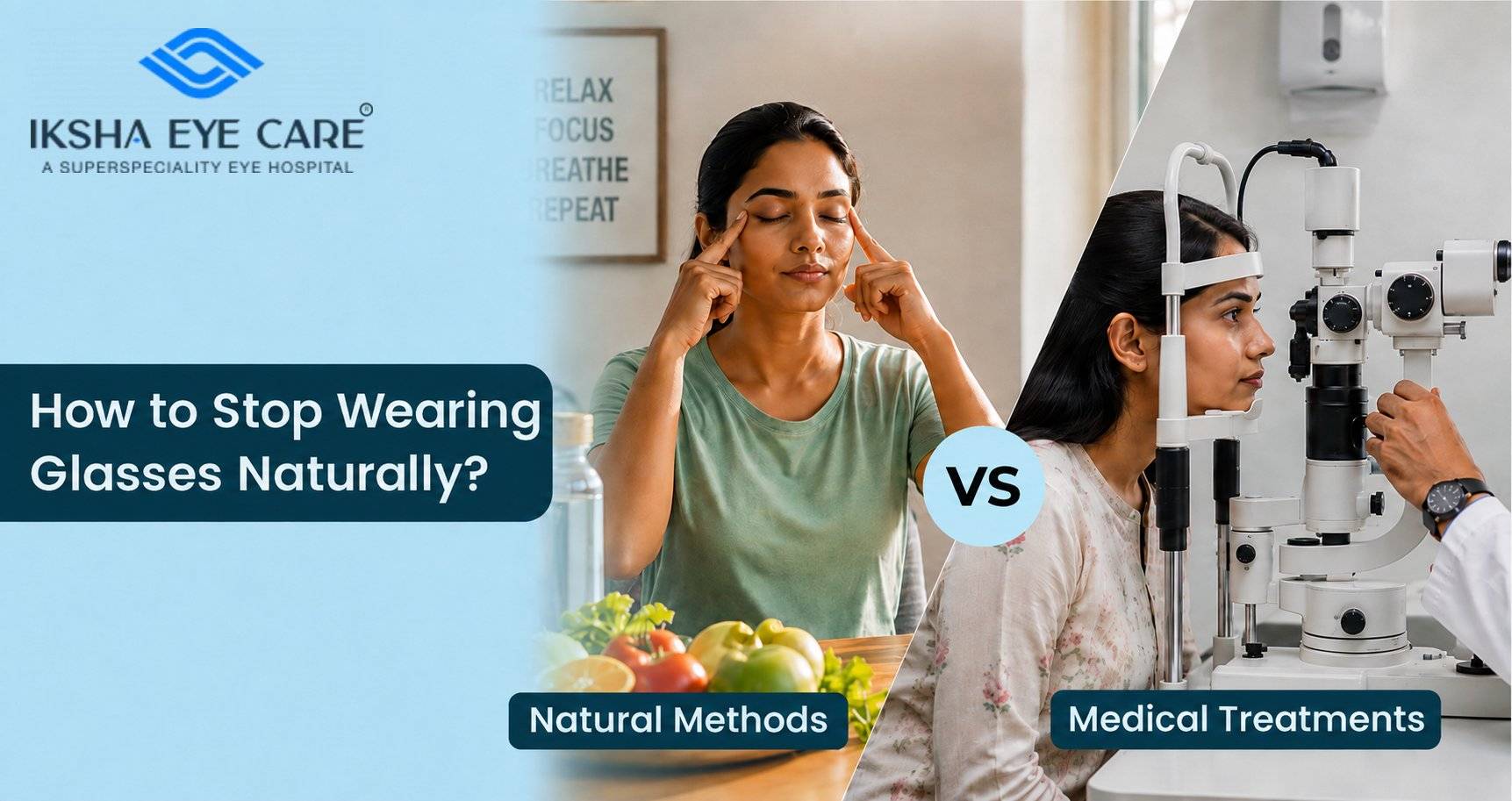
How to stop wearing glasses naturally is a common question among people who are tired of depending on spectacles every day. However, whether you can stop wearing glasses depends on why you need them in the first place. Refractive errors such as myopia (short-sightedness), hyperopia (long-sightedness), and astigmatism occur because of the way the eye focuses light, and there is currently no proven eye exercise, food, or home remedy that permanently removes these refractive errors.
That does not mean healthy habits are useless. A balanced diet, adequate sleep, regular outdoor activity, appropriate screen habits, and protection from excessive ultraviolet exposure can support overall eye health. For people who want to reduce or eliminate their dependence on glasses, medically established options such as LASIK, SMILE, and other refractive procedures may be considered after a detailed eye examination.
Why Do You Need Glasses?
Glasses correct a refractive error by changing the way incoming light is focused onto the retina. In myopia, distant objects may appear blurry because light focuses in front of the retina. Hyperopia can make nearby objects difficult to see clearly, while astigmatism can cause blurred or distorted vision at different distances.
Presbyopia is different. It is an age-related change in the eye’s ability to focus on nearby objects and commonly becomes noticeable in middle age. Reading glasses, progressive lenses, contact lenses, or selected surgical options may be used depending on the individual’s needs.
Understanding the underlying problem is important because a method that supports general eye health cannot necessarily change the eye’s optical structure. This is why an eye examination should come before trying to permanently reduce dependence on spectacles.
How to Improve Your Eyesight When You Have Glasses
If you are wondering how to improve your eyesight when you have glasses, the first step is to make sure your prescription is accurate and up to date. Wearing correctly prescribed glasses does not make your eyes weaker or increase your dependence on spectacles. In fact, clear vision helps you perform everyday activities more comfortably and safely.
Lifestyle habits can also support visual comfort. If you spend many hours working on a computer or phone, follow the 20-20-20 approach: after approximately 20 minutes of near-screen work, look at something around 20 feet away for about 20 seconds. Frequent blinking, appropriate screen brightness, good lighting, and maintaining a comfortable viewing distance can also reduce digital eye strain.
For children and teenagers, spending more time outdoors is particularly important because regular outdoor exposure has been associated with a lower risk of developing or progressing myopia. These habits support eye health, but they should not be presented as a guaranteed way to reverse an existing prescription.
Natural Ways to Improve Eyesight Without Glasses
People searching for natural ways to improve eyesight without glasses will find many claims online, but it is important to separate evidence-based eye care from unsupported promises.
Healthy habits can help maintain good visual function. They include eating a varied diet, staying physically active, managing conditions such as diabetes and high blood pressure, avoiding smoking, getting adequate sleep, and protecting the eyes from excessive UV exposure.
These measures can support the health of the retina, optic nerve, and other eye structures. They cannot, however, reliably reshape the cornea or eyeball sufficiently to eliminate myopia, hyperopia, or astigmatism.
If your goal is specifically to become less dependent on glasses, an ophthalmologist can assess your prescription, corneal health, tear film, eye pressure, and overall eye condition before discussing appropriate options.
Can Eye Exercises Remove Glasses?
The idea of an eye exercise to remove glasses is widely discussed, particularly on social media. Exercises may help with certain aspects of visual comfort or eye coordination, but there is no established exercise that permanently eliminates common refractive errors such as myopia or astigmatism.
For example, taking regular breaks from close-up work can reduce eye fatigue. Focusing at different distances may also make prolonged near work feel more comfortable for some people. These practices should be viewed as habits for reducing visual strain rather than a replacement for corrective treatment.
If someone experiences sudden changes in vision, double vision, persistent eye pain, flashes, or a sudden increase in floaters, exercise should not be used as a substitute for professional assessment.
Foods to Improve Eyesight Without Glasses
Searching for foods to improve eyesight without glasses often leads to claims that particular foods can remove a spectacle prescription. There is no food that has been proven to permanently correct refractive errors.
Nevertheless, nutrition plays an important role in maintaining overall eye health. A varied diet containing leafy green vegetables, colorful fruits and vegetables, nuts, seeds, fish, and other nutrient-rich foods can contribute to a healthy diet.
Nutrients such as vitamin A, vitamin C, vitamin E, zinc, and certain carotenoids have roles in normal eye function. However, supplements should not automatically be taken in high doses. Some supplements can interact with medications or may be inappropriate for certain individuals.
The goal should therefore be nutritional support for healthy eyes, rather than expecting a particular food to eliminate the need for glasses.
When Can Medical Treatment Reduce Dependence on Glasses?
For adults who want to reduce their dependence on spectacles, refractive surgery may be an option depending on their age, prescription, corneal thickness, eye health, and overall suitability.
LASIK uses a laser to reshape the cornea so that light can focus more accurately on the retina. SMILE is another laser vision correction procedure that uses a small corneal incision to remove a precisely created tissue lenticule. Other procedures may be considered for selected patients.
These treatments are not suitable for everyone. A comprehensive pre-operative evaluation is necessary to determine whether the eyes are healthy enough for surgery and which procedure, if any, is appropriate.
It is also important to understand that no procedure can guarantee perfect vision for every patient or prevent future age-related changes such as presbyopia.
Glasses, Contact Lenses or Surgery: Which Is Right for You?
There is no universally best method of correcting vision. Glasses remain a safe, simple, and effective option for many people. Contact lenses can provide a wider field of vision but require careful hygiene and responsible use.
Refractive surgery may appeal to people who want greater freedom from spectacles or contact lenses. However, the decision should be based on an ophthalmologist’s assessment rather than advertising claims or the experience of another person.
Factors such as prescription stability, corneal measurements, dry-eye symptoms, eye health, lifestyle, occupation, and expectations all matter when selecting a treatment.
Conclusion
So, how to stop wearing glasses naturally? Healthy lifestyle habits can support overall eye health and reduce visual discomfort, but there is currently no scientifically established exercise, food, or natural remedy that permanently removes common refractive errors.
If you want to reduce your dependence on glasses, the more reliable approach is to understand the cause of your prescription and discuss suitable options with an eye-care professional. Depending on your individual eye health, glasses, contact lenses, LASIK, SMILE, or another treatment may be appropriate. A proper examination is the best starting point for making that decision safely.
FAQs
Can eye exercises remove my spectacle number?
There is no established eye exercise that permanently removes common refractive errors such as myopia, hyperopia, or astigmatism. Eye breaks and focusing habits may help reduce visual fatigue.
Can food improve eyesight without glasses?
A nutritious diet supports overall eye health, but no specific food has been proven to eliminate the need for glasses caused by a refractive error.
How can I improve my eyesight when I have glasses?
Use the correct prescription, maintain healthy screen habits, take regular visual breaks, spend time outdoors, eat a balanced diet, protect your eyes from UV exposure, and attend regular eye examinations.
Is LASIK better than natural methods for removing glasses?
Natural methods can support eye health but do not reliably correct refractive errors. LASIK and other refractive procedures can reduce dependence on glasses in appropriately selected patients, but suitability must be determined through an eye examination.
Can I get treatment for uveitis in Mumbai?
Yes. People seeking uveitis eye treatment in Mumbai should undergo an ophthalmic evaluation because uveitis requires diagnosis and treatment based on its underlying cause. Iksha Eye Care can be considered for professional eye evaluation and treatment.