






Introduction – Why Understanding the Difference Matters as You Age
As we grow older, our eyes begin to experience natural changes. While some of these changes are harmless, others can significantly impact clarity, comfort, and overall vision quality. The most common age-related eye condition is cataract, but many people confuse its symptoms with glaucoma, age-related macular degeneration (AMD), diabetic retinopathy, and presbyopia.
Misinterpreting one condition for another can delay treatment and worsen long-term vision health. That’s why understanding the difference between cataracts and other age-related eye problems is essential.
At Iksha Eye Care in Mumbai, patients receive detailed eye evaluations, cataract diagnosis, glaucoma screening, retina tests, and vision assessments making early detection and accurate treatment possible.
What Is Cataract? – The Most Common Age-Related Eye Condition
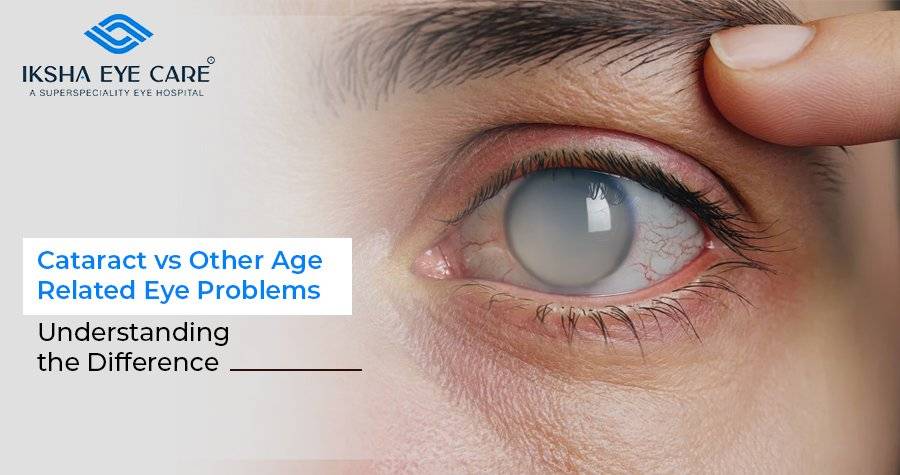
A cataract forms when the natural lens of your eye becomes cloudy. This cloudiness gradually blocks or distorts light from reaching the retina, causing blurry or dim vision.
Key characteristics of cataracts include:
- Gradually worsening blurry vision that feels like looking through a foggy window
- Increased glare sensitivity, especially while driving at night
- Colors appearing dull or yellowish
- Needing brighter lighting for reading
- Frequent prescription changes
- Seeing halos around lights
Cataracts are extremely common after age 50, and nearly everyone experiences some degree of lens clouding later in life.
At Iksha Eye Care, cataracts are diagnosed using advanced slit-lamp evaluation, retina tests, and vision assessments, followed by modern, painless cataract surgery when necessary.
How Cataracts Differ from Other Age-Related Eye Problems
Although symptoms may seem similar, cataracts are fundamentally different from other age-related issues. Here’s how they compare.
1. Cataract vs. Presbyopia (Age-Related Reading Difficulty)
Presbyopia is a natural loss of near-focusing ability due to stiffening of the eye’s internal lens.
Unlike cataracts, it does not involve cloudiness.
Differences:
- Cataracts cause blurred distance and near vision; presbyopia only affects near vision.
- Cataracts worsen steadily; presbyopia stabilizes with age.
- Cataracts require surgery for correction; presbyopia can be managed with reading glasses or multifocal lenses.
Presbyopia is extremely common after age 40, but it does not harm long-term vision the way untreated cataracts can.
2. Cataract vs. Glaucoma (Optic Nerve Damage)
Glaucoma is a serious condition where high eye pressure damages the optic nerve, leading to irreversible vision loss.
Differences:
- Cataracts affect the lens; glaucoma affects the optic nerve.
- Cataract vision loss is reversible through surgery; glaucoma vision loss is permanent.
- Glaucoma often begins with peripheral (side) vision loss, not central blur.
- Cataracts usually cause cloudiness; glaucoma may cause tunnel vision.
Iksha Eye Care performs non-contact tonometry, OCT scanning, and optic nerve evaluation to diagnose glaucoma early.
3. Cataract vs. Age-Related Macular Degeneration (AMD)
AMD damages the macula, the part of the retina responsible for sharp central vision.
Differences:
- Cataracts cause overall blur; AMD causes central blind spots.
- Cataracts affect the lens; AMD affects the retina.
- Colors appear dull in cataracts; in AMD, images appear distorted or missing.
- Cataract surgery restores vision; AMD requires ongoing medical management.
AMD mainly affects individuals over 60. Iksha Eye Care uses retina imaging to detect early changes.
4. Cataract vs. Diabetic Retinopathy
Diabetic retinopathy affects blood vessels in the retina and is a major cause of blindness in diabetic individuals.
Differences:
- Cataracts occur due to lens aging; diabetic retinopathy is caused by uncontrolled blood sugar.
- Cataracts create cloudy vision; diabetic retinopathy causes floaters, dark spots, or fluctuating vision.
- Cataract vision loss is reversible; retinopathy requires laser or injection treatments.
Iksha Eye Care offers comprehensive diabetic eye screenings to prevent vision-threatening complications.
5. Cataract vs. Dry Eye Disease
Dry eye disease occurs when the eyes don’t produce enough tears or the tears evaporate too quickly.
Differences:
- Cataracts cause cloudiness; dry eyes cause irritation, burning, and fluctuating vision.
- Cataracts are treated surgically; dry eyes are treated with drops, plugs, or lifestyle changes.
- Dry eye symptoms vary throughout the day; cataract symptoms are constant and progressively worsen.
This is one of the most common conditions seen alongside cataracts in older adults.
When Vision Changes Indicate Cataracts and Not Another Condition
You may be dealing with cataracts if you notice:
- Vision that appears constantly cloudy, dull, or dim
- Glare sensitivity that makes headlights unbearable
- Needing more and more light to read
- Colors shifting toward yellow or brown
- Difficulty recognizing faces
These symptoms are classic signs of lens clouding and are best evaluated through a comprehensive eye exam.
Iksha Eye Care examines the lens clarity, retina health, and corneal condition to distinguish cataracts from other issues.
Treatment Differences – Why Cataracts Require Surgery, Not Medication
Cataracts cannot be reversed with:
- Eye drops
- Medicines
- Diet changes
- Exercises
The only effective treatment is cataract surgery, where the cloudy lens is removed and replaced with a clear artificial lens (IOL).
This procedure is safe, painless, and restores vision immediately.
On the other hand:
- Glaucoma requires pressure-lowering treatments.
- AMD requires injections or supplements.
- Diabetic retinopathy requires lasers or injections.
- Dry eyes require tear-based treatments.
This is why identifying the correct condition matters for long-term eyesight.
Conclusion – Early Diagnosis Is the Key to Protecting Aging Eyes
Cataracts are extremely common but they are also the most treatable age-related eye problem.
Other conditions such as glaucoma, AMD, diabetic retinopathy, and dry eye disease require ongoing management and may lead to permanent vision loss if ignored.
A comprehensive eye exam at Iksha Eye Care in Mumbai can accurately diagnose the cause of your vision changes and guide you toward the right treatment at the right time.
Visit Iksha Eye Care to protect your vision and maintain clear eyesight as you age:
https://ikshaeyecare.com/
FAQs
1. How is cataract different from glaucoma?
Cataracts cloud the lens and cause reversible vision blur, while glaucoma damages the optic nerve and leads to irreversible vision loss.
2. Can cataracts be treated without surgery?
No. Cataract removal surgery is the only effective treatment once symptoms affect daily life.
3. How do I know if my vision issues are from cataracts or something else?
A detailed eye exam at Iksha Eye Care can identify whether your vision loss is from cataracts, glaucoma, AMD, diabetic retinopathy, or dry eyes.
4. Do all age-related eye problems cause blindness?
No. Cataracts are fully treatable, but glaucoma and advanced diabetic retinopathy can cause permanent damage if untreated.
5. At what age should I start regular eye checkups?
After age 40, a comprehensive eye exam every year is recommended to detect early changes.