






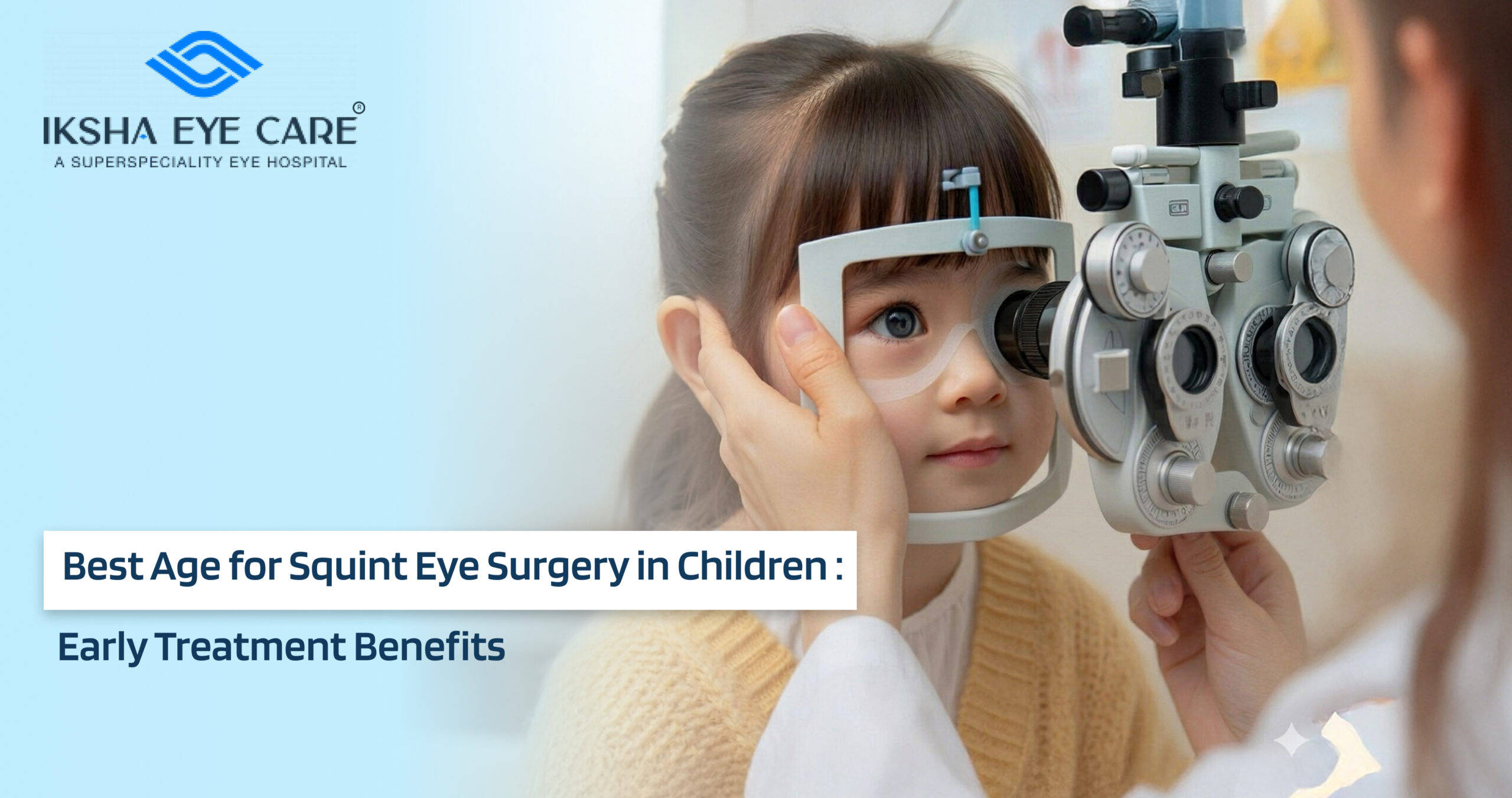
The best age for squint eye (strabismus) surgery in children is typically between 6 months to 6 years, depending on the type and severity of the condition. Early treatment helps restore proper eye alignment, improves binocular vision, and prevents long-term vision problems such as amblyopia (lazy eye). Timely intervention ensures better visual development and long-term outcomes.
Understanding Squint Eye (Strabismus) in Children
Squint eye, medically known as strabismus, is a condition where the eyes do not align properly and point in different directions. One eye may look straight ahead while the other turns inward, outward, upward, or downward.
We observe that this condition can affect:
- Depth perception
- Visual development
- Eye coordination
- Confidence and social interaction
Early detection and timely treatment play a crucial role in ensuring normal vision development in children.
What Causes Squint Eye in Children?
Strabismus can develop due to various factors, including:
- Weak or imbalanced eye muscles
- Neurological coordination issues
- Refractive errors (like farsightedness)
- Genetic predisposition
- Premature birth or developmental conditions
In many cases, the condition appears during infancy or early childhood, making early monitoring essential.
Best Age for Squint Eye Surgery
Early Intervention: The Ideal Window
The most effective age for squint eye correction depends on the type of strabismus, but generally:
- Infants (6–12 months): For congenital squint, early surgery may be recommended
- Toddlers (1–3 years): High success rates due to active visual development
- Preschool age (3–6 years): Ideal time to correct alignment before school years
We emphasize that early surgical intervention significantly improves visual outcomes because the brain is still developing the ability to use both eyes together.
Why Timing Matters in Squint Surgery
The brain learns to coordinate both eyes during early childhood. If the eyes are misaligned:
- The brain may start ignoring input from one eye
- This can lead to amblyopia (lazy eye)
- Depth perception may not develop properly
Correcting the alignment early ensures that both eyes work together effectively, improving overall vision quality.
Benefits of Early Squint Eye Surgery
1. Improved Binocular Vision
Early treatment helps restore binocular vision, allowing both eyes to function as a team. This is essential for:
- Depth perception
- Spatial awareness
- Hand-eye coordination
2. Prevention of Lazy Eye (Amblyopia)
One of the biggest risks of untreated squint is amblyopia. Early surgery helps:
- Prevent permanent vision loss
- Ensure equal visual development in both eyes
3. Better Cosmetic Appearance
Aligned eyes improve:
- Facial symmetry
- Confidence in children
- Social interactions
Children treated early are less likely to face self-esteem issues related to appearance.
4. Enhanced Academic and Daily Performance
Proper vision plays a key role in:
- Reading and writing
- Classroom learning
- Sports and physical activities
Correcting squint early ensures children perform better in both academics and daily life activities.
Is Surgery Always Required?
Not all cases of squint require surgery. Treatment depends on the severity and underlying cause.
Non-Surgical Treatments Include:
- Prescription glasses
- Eye patching therapy
- Vision therapy exercises
However, when these methods do not fully correct the alignment, surgical intervention becomes necessary.
What Happens During Squint Eye Surgery?
Squint surgery involves adjusting the eye muscles to improve alignment.
We highlight that modern procedures are:
- Safe and minimally invasive
- Performed under anesthesia
- Completed within a short duration
- Associated with quick recovery times
Advanced eye care centers such as Iksha Eye Care offer specialized pediatric eye care with experienced ophthalmologists and advanced technology, ensuring high success rates.
Recovery and Post-Surgery Care
After surgery, children may experience:
- Mild redness or discomfort
- Temporary blurred vision
- Sensitivity to light
Recovery typically includes:
- Use of prescribed eye drops
- Follow-up consultations
- Monitoring visual improvement
Most children return to normal activities within a few days to weeks.
Long-Term Outcomes of Early Treatment
Children who undergo early squint correction often experience:
- Stable eye alignment
- Improved visual coordination
- Reduced need for additional treatments
- Better quality of life
Early treatment ensures that vision develops normally alongside physical and cognitive growth.
When Should Parents Consult an Eye Specialist?
Parents should seek immediate evaluation if they notice:
- Eyes not aligned properly
- Frequent eye rubbing
- Head tilting or squinting
- Difficulty focusing on objects
- Double vision
Early consultation allows for timely diagnosis and effective treatment planning.
Why Choosing the Right Eye Care Center Matters
Successful squint treatment depends on:
- Accurate diagnosis
- Experienced specialists
- Advanced technology
- Personalized care approach
Leading centers provide:
- Comprehensive pediatric eye care
- Modern surgical techniques
- Child-friendly environment
This ensures a safe and comfortable experience for both children and parents.
Conclusion
Squint eye in children is a condition that requires timely attention and proper treatment. The best age for surgery varies, but early intervention ideally before the age of 6 offers the most effective results.
By addressing the issue early, we can ensure:
- Proper eye alignment
- Healthy visual development
- Improved confidence and quality of life
With advancements in eye care and experienced specialists, squint correction today is safe, effective, and highly successful.
FAQ
1. What is the best age for squint eye surgery in children?
The best age for squint eye surgery is usually between 6 months and 6 years, depending on the type and severity of the condition.
2. Can squint eye be corrected without surgery?
Yes, mild cases can be treated with glasses, patching, or vision therapy. However, surgery may be required for proper alignment in more severe cases.
3. Is squint eye surgery safe for children?
Yes, modern squint eye surgery is safe, minimally invasive, and performed by experienced specialists with high success rates.
4. What happens if squint eye is not treated early?
Untreated squint can lead to lazy eye (amblyopia), poor depth perception, and long-term vision problems.
5. How long does recovery take after squint surgery?
Most children recover within a few days to weeks, with gradual improvement in eye alignment and vision.