







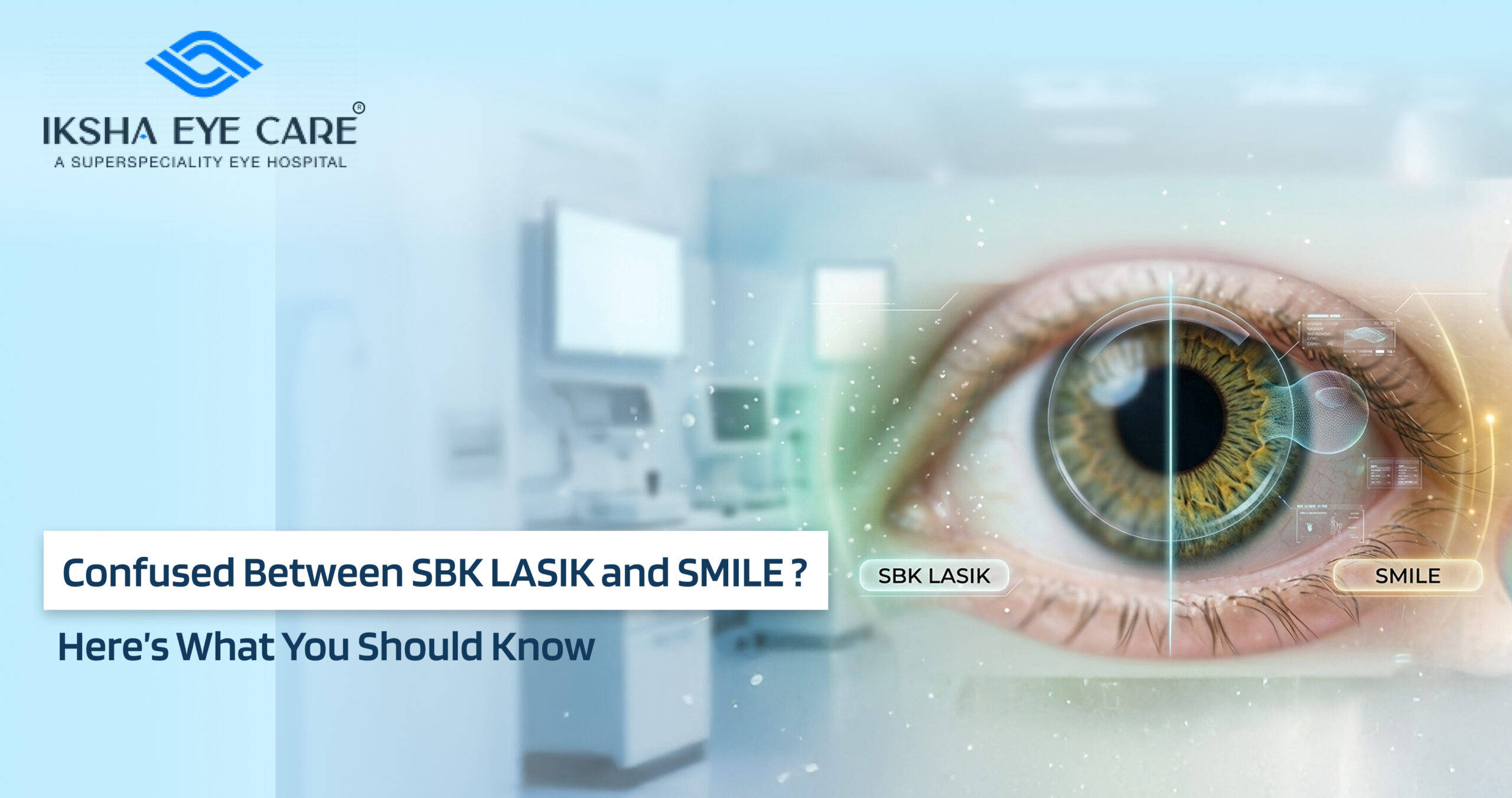
Laser vision correction has transformed the way people treat refractive errors such as myopia (nearsightedness), astigmatism, and farsightedness. Two of the most advanced procedures available today are SBK LASIK and SMILE eye surgery. Many patients considering laser eye surgery often ask the same question: Which procedure is better SBK LASIK or SMILE?
Both procedures aim to reduce or eliminate dependence on glasses or contact lenses. However, they differ in technique, recovery time, and suitability for different eye conditions. Understanding these differences can help patients make a more informed decision when consulting a specialist at advanced eye care centers such as Iksha Eye Care.
This guide explains the key differences, benefits, and considerations for each procedure to help you choose the best vision correction option.
Understanding Laser Vision Correction
Laser vision correction works by reshaping the cornea, the clear front surface of the eye. When the cornea’s shape is corrected, light entering the eye focuses properly on the retina, resulting in clearer vision.
Two modern techniques widely used for this purpose include:
- SBK LASIK (Sub-Bowman’s Keratomileusis)
- SMILE (Small Incision Lenticule Extraction)
Both procedures are minimally invasive and typically take only a few minutes per eye, allowing patients to return home the same day.
What Is SBK LASIK?
SBK LASIK is an advanced version of traditional LASIK surgery. It uses a very thin corneal flap to access the inner corneal layer before reshaping it with a laser.
How SBK LASIK Works
- A very thin flap is created on the cornea.
- The flap is lifted to expose the underlying corneal tissue.
- An excimer laser reshapes the cornea to correct the refractive error.
- The flap is repositioned to heal naturally.
Because SBK LASIK uses a thinner flap compared to conventional LASIK, it preserves more corneal tissue and improves safety for many patients.
Benefits of SBK LASIK
- Fast visual recovery, often within 24 hours
- Suitable for a wider range of prescriptions
- Long track record with predictable results
- Quick and painless procedure
LASIK procedures typically provide rapid improvement in vision, with many patients seeing clearly the next day.
What Is SMILE Eye Surgery?
SMILE (Small Incision Lenticule Extraction) is one of the newest laser vision correction techniques. Unlike LASIK, SMILE does not create a corneal flap.
How SMILE Surgery Works
- A femtosecond laser creates a tiny lens-shaped piece of tissue inside the cornea.
- A small incision (about 2–4 mm) is made.
- The surgeon removes the tissue through the incision.
- The cornea reshapes naturally, correcting vision.
Because SMILE uses a small incision instead of a flap, it is considered a minimally invasive and flap-free procedure.
SBK LASIK vs SMILE: Key Differences
Understanding the differences between these procedures helps determine which option may be more suitable.
| Feature | SBK LASIK | SMILE |
| Surgical Method | Thin corneal flap created | Small incision, no flap |
| Recovery Speed | Very fast (often within 24 hours) | Slightly slower stabilization |
| Dry Eye Risk | Slightly higher | Lower risk |
| Treatment Range | Myopia, hyperopia, astigmatism | Mostly myopia and mild astigmatism |
| Corneal Strength | Slightly reduced due to flap | Better preserved |
SMILE uses a smaller incision and preserves more corneal nerves, which may reduce early dry eye symptoms compared to LASIK.
Recovery Time: What Patients Should Expect
Recovery time is an important factor for many patients considering laser vision correction.
SBK LASIK Recovery
- Clear vision often within 24 hours
- Mild dryness or irritation for a few days
- Most people return to normal activities quickly
SMILE Recovery
- Vision improvement within a few days
- Full stabilization may take several days to weeks
- Less postoperative dryness for some patients
Although SMILE is less invasive, LASIK often provides faster visual recovery immediately after surgery.
Who Is a Good Candidate for SBK LASIK?
SBK LASIK may be recommended for patients who:
- Have myopia, hyperopia, or astigmatism
- Want fast visual recovery
- Have sufficient corneal thickness
- Require correction for higher refractive errors
Because LASIK treats a broader range of prescriptions, it remains one of the most commonly performed refractive surgeries worldwide.
Who Is a Good Candidate for SMILE Surgery?
SMILE may be ideal for patients who:
- Have moderate to high myopia
- Experience dry eye symptoms
- Prefer a flap-free procedure
- Participate in sports or activities with potential eye impact
Since SMILE does not involve a flap, it reduces the risk of flap-related complications.
Safety and Success Rates
Both procedures have high success rates and strong patient satisfaction.
Studies show that most patients undergoing modern laser eye surgery achieve 20/25 vision or better after treatment.
Safety and outcomes depend on factors such as:
- Eye health
- Corneal thickness
- Prescription stability
- Surgeon experience
- Advanced diagnostic technology
Eye specialists evaluate these factors carefully before recommending the most appropriate procedure.
Why Expert Evaluation Is Important
Choosing between SBK LASIK and SMILE should always involve a comprehensive eye examination. Every patient’s eyes are unique, and the best procedure depends on detailed diagnostic testing.
Advanced eye care centers such as Iksha Eye Care provide specialized vision correction consultations where doctors evaluate:
- Corneal thickness
- Tear film quality
- Refractive error
- Overall eye health
Based on these findings, specialists recommend the safest and most effective treatment.
Final Thoughts
Both SBK LASIK and SMILE eye surgery offer safe, effective solutions for correcting refractive errors and reducing dependence on glasses or contact lenses.
SBK LASIK is often preferred for patients seeking fast recovery and treatment for a wide range of vision problems, while SMILE may appeal to those looking for a minimally invasive procedure with potentially lower dry-eye risk.
A detailed consultation with experienced eye surgeons is the best way to determine which option suits your eyes and lifestyle. With advanced technology and personalized treatment planning, modern laser vision correction can provide life-changing visual freedom.
Schema FAQ Section
What is the difference between SBK LASIK and SMILE surgery?
SBK LASIK involves creating a thin corneal flap to reshape the cornea, while SMILE uses a small incision to remove a tiny piece of corneal tissue without creating a flap.
Is SMILE safer than LASIK?
SMILE may reduce the risk of flap-related complications and early dry-eye symptoms because it uses a smaller incision, though both procedures are considered safe when performed by experienced surgeons.
Which procedure has faster recovery: SBK LASIK or SMILE?
SBK LASIK typically offers faster visual recovery, with many patients experiencing clear vision within 24 hours.
Who is eligible for SMILE eye surgery?
SMILE is generally suitable for patients with moderate to high myopia and mild astigmatism who prefer a minimally invasive procedure.
Can laser eye surgery permanently remove glasses?
Laser eye surgery significantly reduces or eliminates the need for glasses or contact lenses for many patients, though results depend on individual eye conditions.